• Skip to primary navigation
  • Skip to main content
  • Skip to primary sidebar
  • Skip to footer
  • Home
  • Blog
  • About
  • The Fine Print
    • Disclaimer
    • Copyright
  • Privacy Policy
  • Contact
  • Paul Ooi Modelworks
  • Nav Social Menu

    • Email
    • Instagram
Paul Ooi Modelworks

Paul Ooi Modelworks

Building a better world, one scale model at a time

  • Index
    • Aircraft
      • WW1 Aircraft
      • Inter-War Aircraft
      • WW2 Allied Aircraft
      • WW2 Axis Aircraft
      • Modern Aircraft
    • Armored Fighting Vehicles
      • Artillery
      • WW1 AFVs
      • WW2 AFVs
      • Tractors and Buldozers
      • Cold War AFVs
    • Ships
      • WW1 Ships
      • Inter-War Ships
      • WW2 Allied Ships
      • WW2 Axis Ships
      • Modern Ships
    • NordicCon Show
    • Figures
    • Buildings
    • Sci-Fi
    • Miscellaneous
  • Tutorials
    • Tutorial 1: Making a Wooden Platform Helipad
    • Tutorial 2: Wooden Hard Stand for Aircraft
    • Tutorial 3: Filling Large Plastic Seams
    • Tutorial 4: Diorama, Sicily 1943
    • Tutorial 5: Making a Gun Emplacement with Earthworks
    • Tutorial 6: Basic figure painting (1/35 scale or 54mm)
    • Tutorial 7: Filling Large Mouse Bite Gouges
    • Tutorial 8: Frames for Vacuum Formed Clear Canopies
    • Tutorial 9: Prepared Tank Position Diorama
    • Tutorial 10: Installing Multi-Piece Track System
    • Tutorial 11: Masking and Painting “Bird-Cage” Clear Canopies
    • Tutorial 12 – Aircraft Wing Tip Navigation Lights with Colored Bulbs
    • Tutorial 13 – Installing Wood Laminate Deck for Model Warships
    • Tutorial 14 – Painting a Rusted Muffler and Exhaust Pipe System
    • Tutorial 15 – Painting German Red Oxide Finish for WW2 Tanks
    • Tutorial 16 – Creating a European cobblestone street base
    • Tutorial 17 – Constructing tracks using single track link system
    • Tutorial 18 – Building a small wooden bridge
Home / Armored Fighting Vehicles / Light and Mighty Tanks of WW2 – Soviet T-70M and ZiS-3 Field Gun from MiniArt

Light and Mighty Tanks of WW2 – Soviet T-70M and ZiS-3 Field Gun from MiniArt

Armored Fighting Vehicles, Artillery, WW2 AFVs

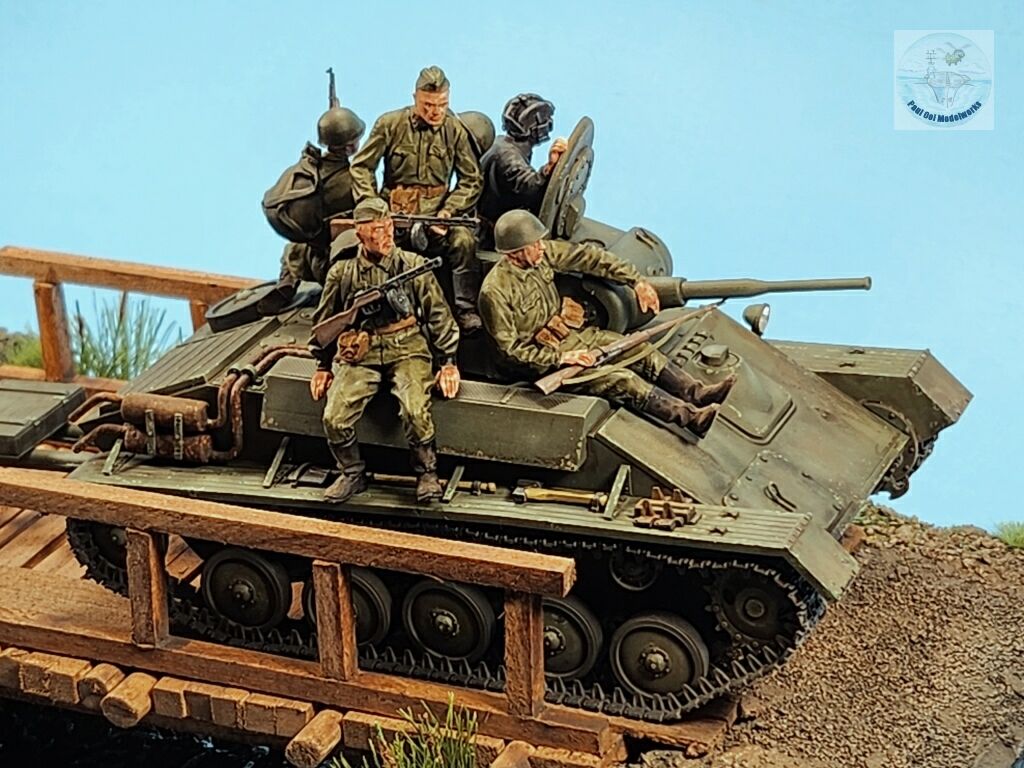
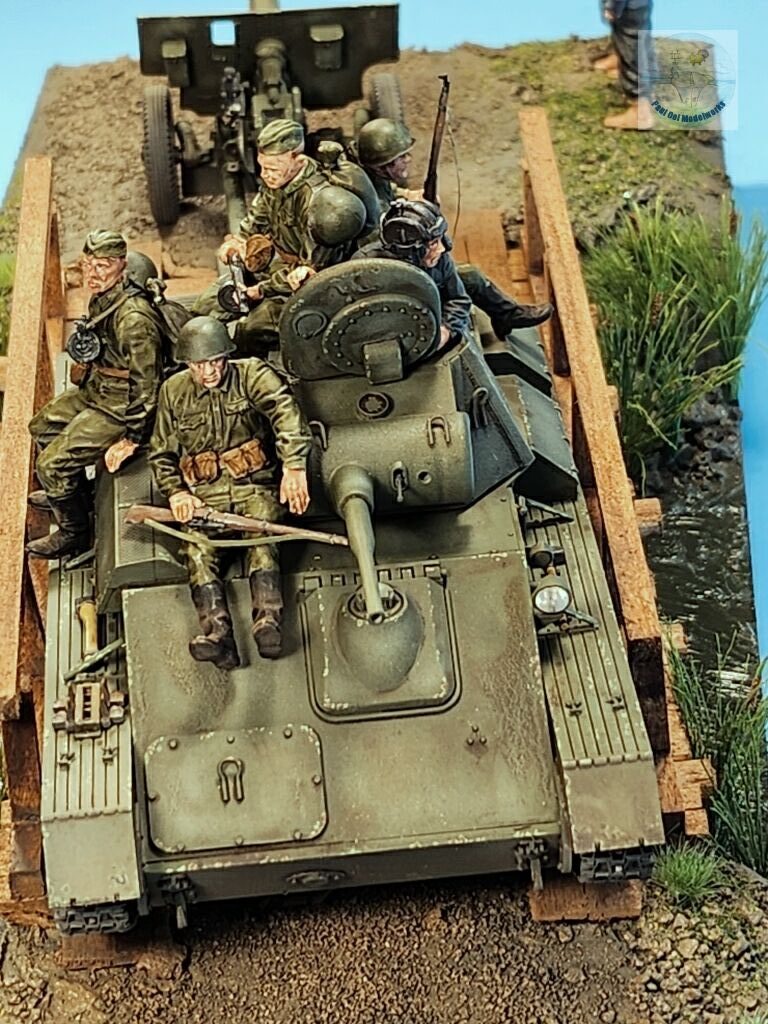
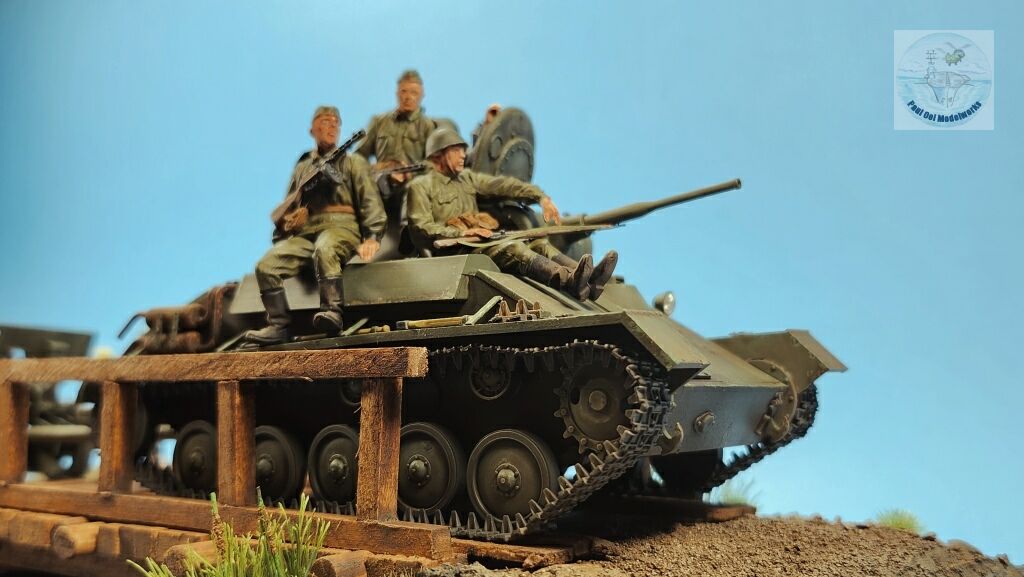
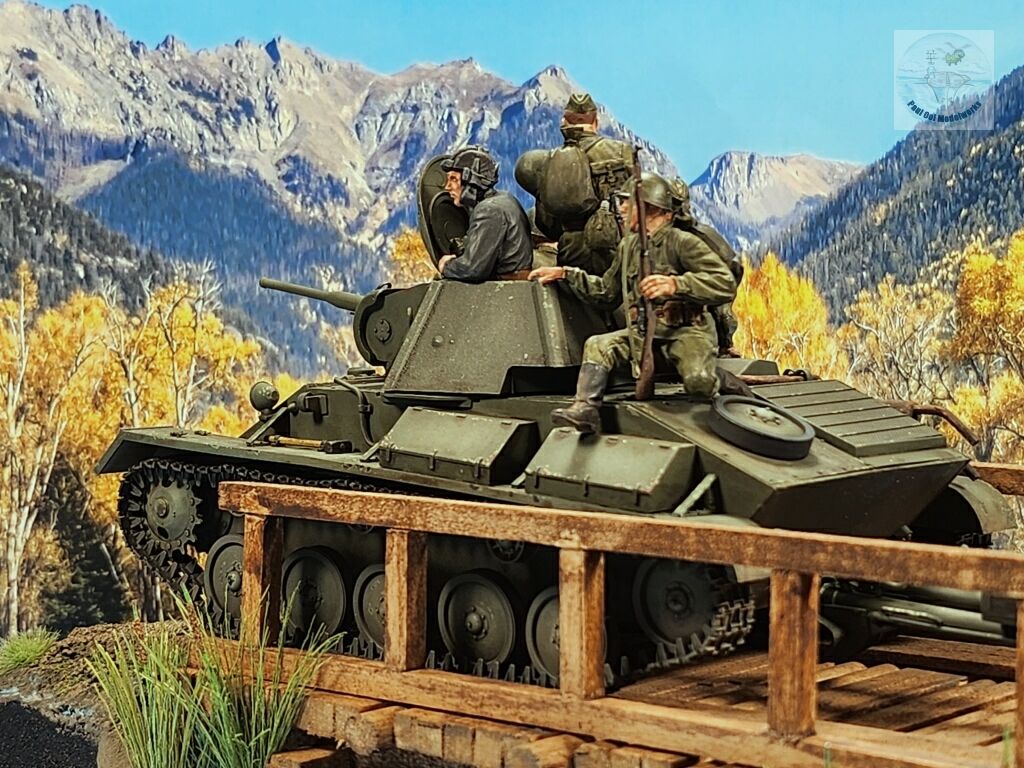
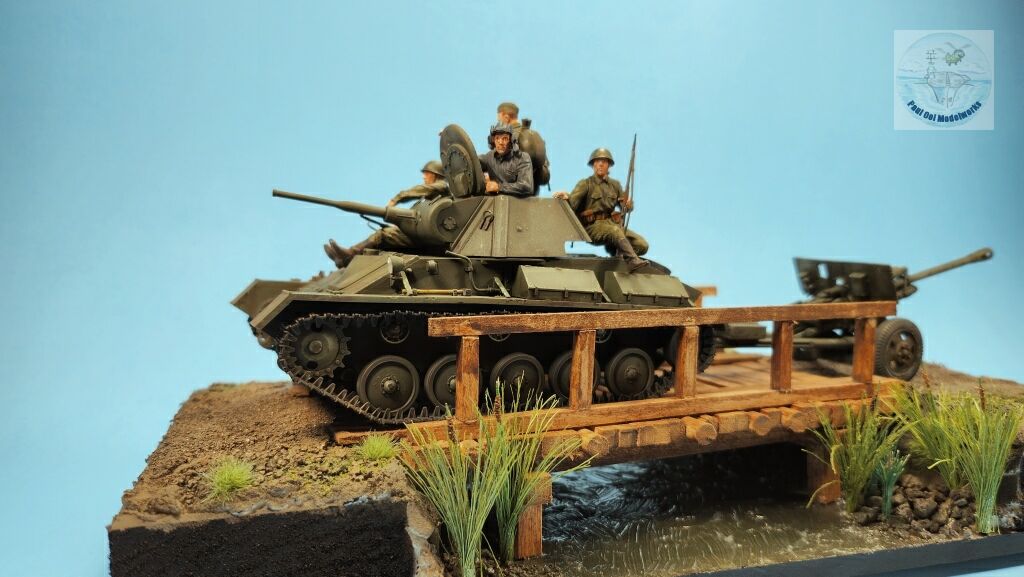
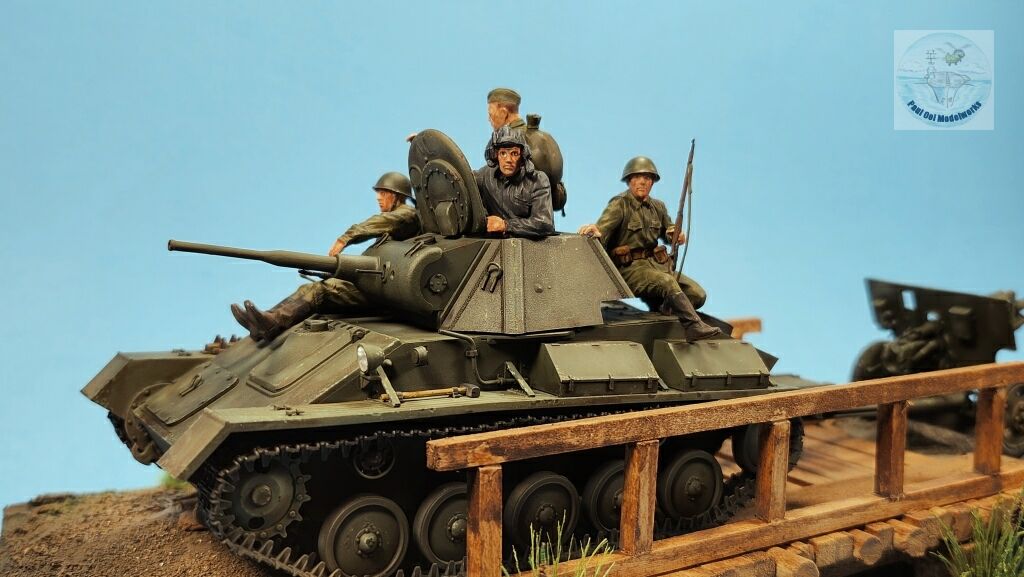
5th in the series of the Light and Mighty Tanks of WW2.

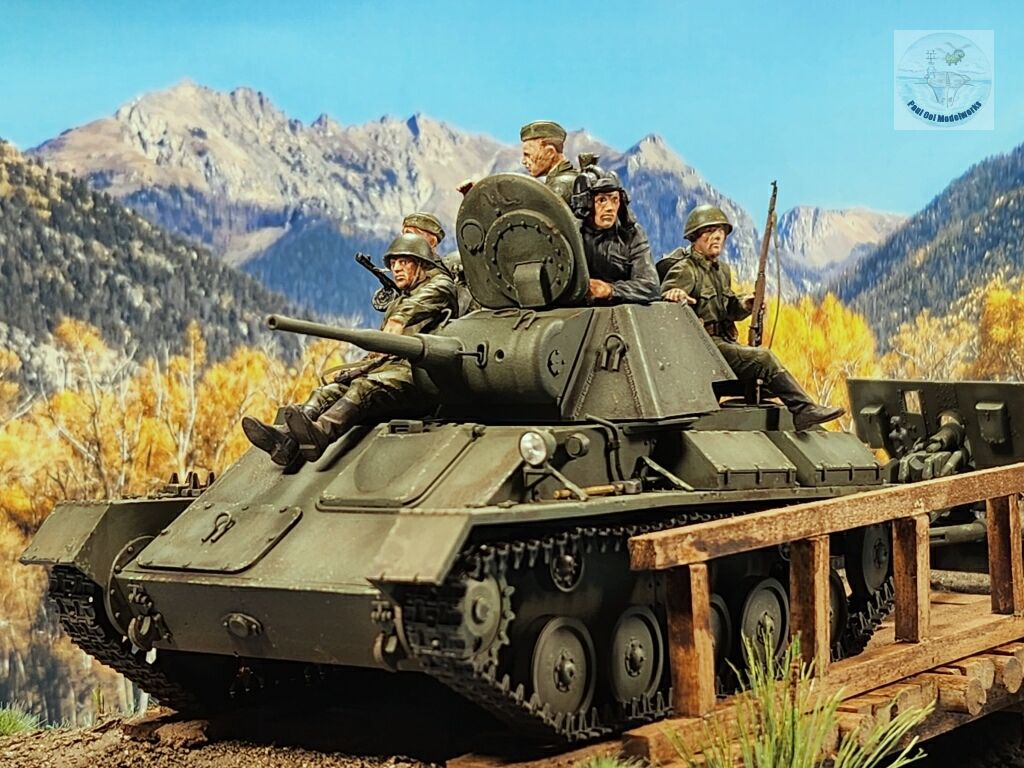
The T-70M light tank may has a passing resemblance to its more famous and larger cousin, the T-34/76 medium tank but they are very different in construction and deployment. The T-70M was the replacement to the earlier T-60 light tank and also the T-50 infantry tank, both of which suffered mightily under the German onslaught of 1941.The T-70 had a 47mm main gun, improved armor, and a better engine for cross-country performance. However, unlike the other powers in WW2, the Soviets used light tanks differently. They were mainly used in the infantry support role, and often doubled up as field tractors for divisional artillery. They were useful in being more mobile than the medium and heavy Soviet tanks, and thus could use narrower bridges and trek through thickly forested areas and boggy grounds. A total of 8,226 of these light tanks were produced, and the Soviets deployed them in active service until 1948. By 1944, they were largely supplanted by the T-34/85 in the infantry support role, but the T-70 chassis became the foundation for the SU-76M tank destroyer, the most numerous WW2 Soviet tank after the T-34 series. It also became the basis for the development of the Soviet amphibious tank, the PT-76 that came out in 1954.

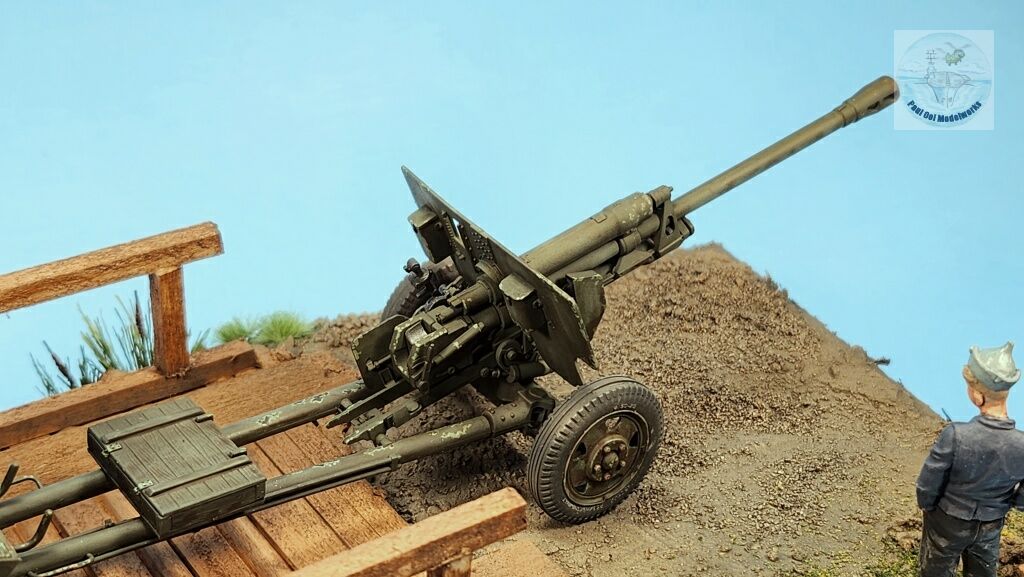
Accompanying the T-70M is the famous ZiS-76 field gun. This was a favorite anti-tank and fire support gun used by Soviets at divisional level. It was a robust and powerful. During Operation Barbarossa, the only Russian artillery piece that could stop German armor was the ZiS-76. This gun and its variants became the most numerous of the Soviet divisional guns with more than 10,000 units made. Also, it was used the longest by many nations, and today, it is still in active duty in Cambodia and Nicaragua! The last time it was used in an actual conflict was the first Russian invasion of Ukraine in 2014. The ZiS-76 also had the distinction of being used by the Wehrmacht because of its ease of operation and accuracy, so good was its design and functionality.

Gallery
https://www.paulooimodelworks.com/wp-content/uploads/2026/02/20260221_200307.mp4

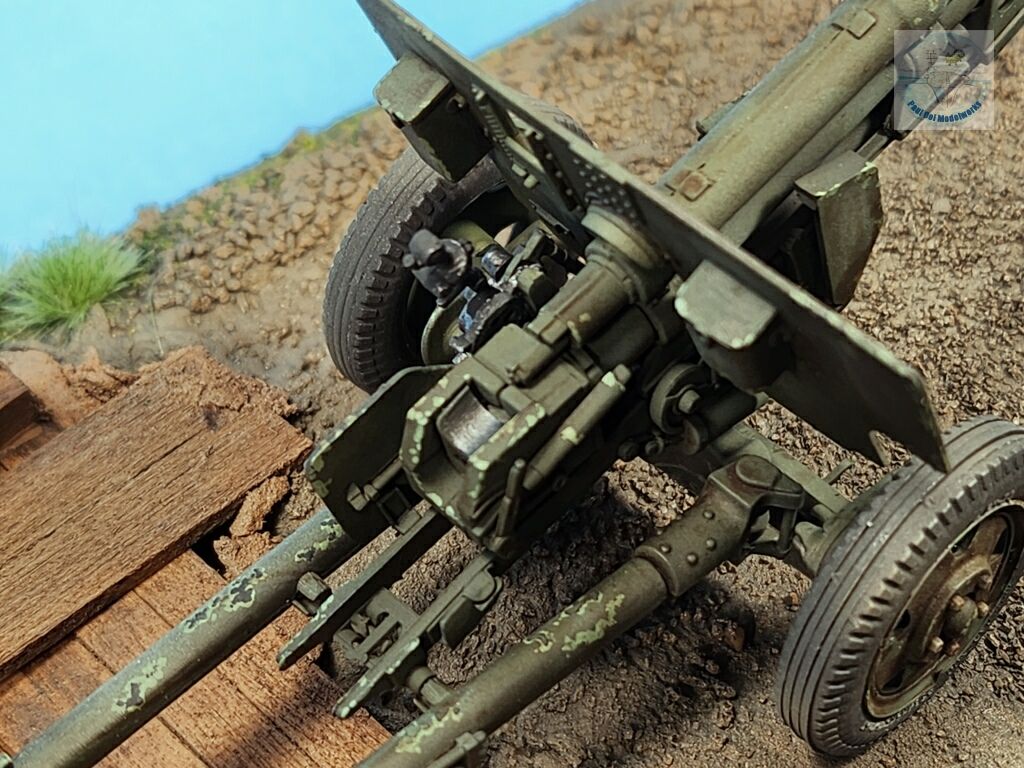
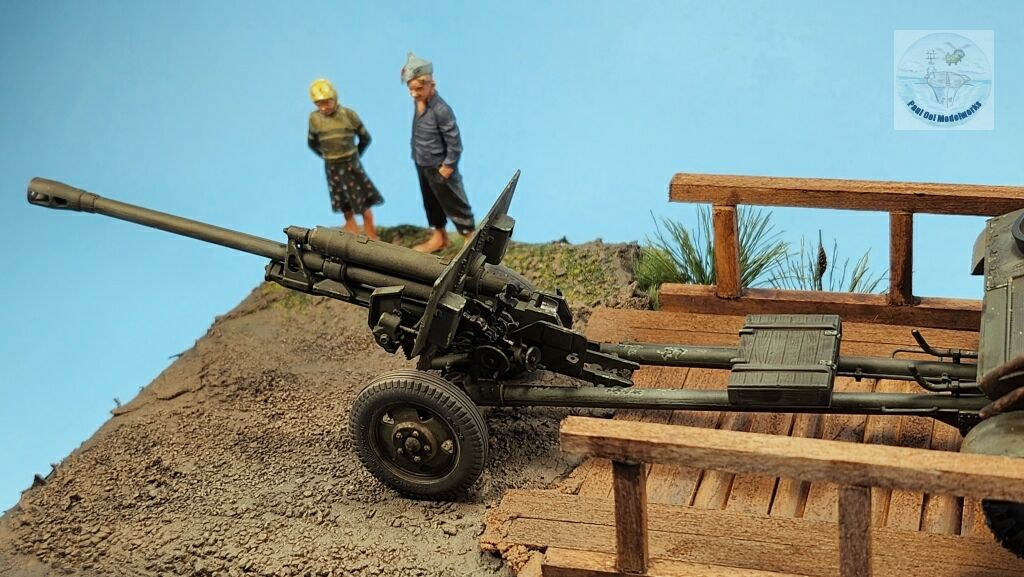
A close-up of the ZiS-3 gun breech

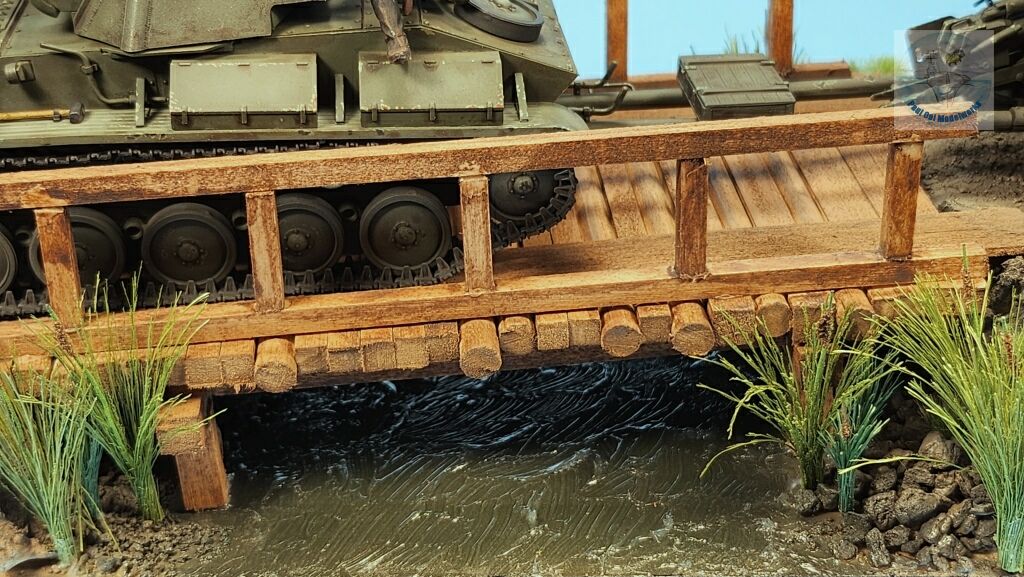
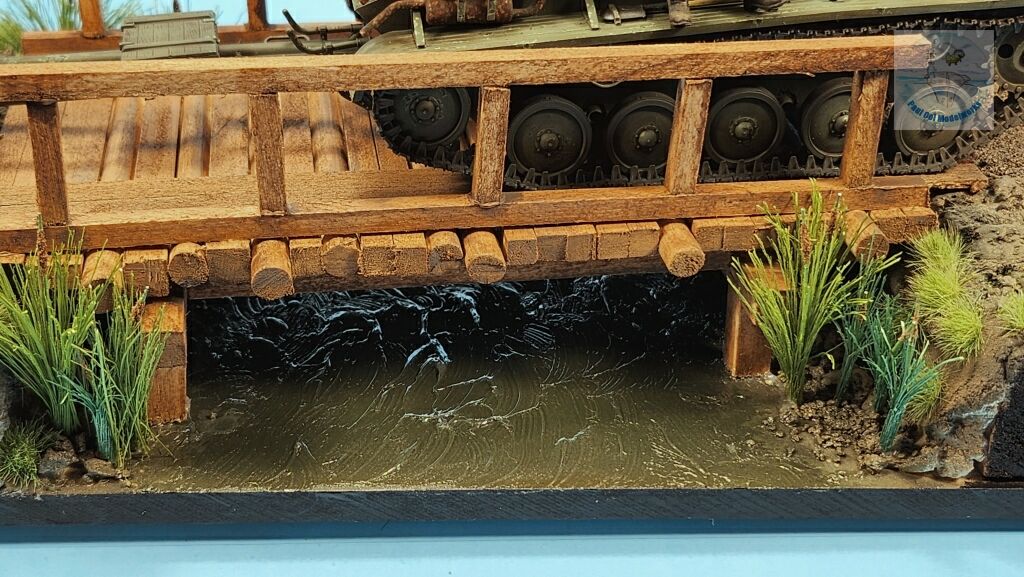
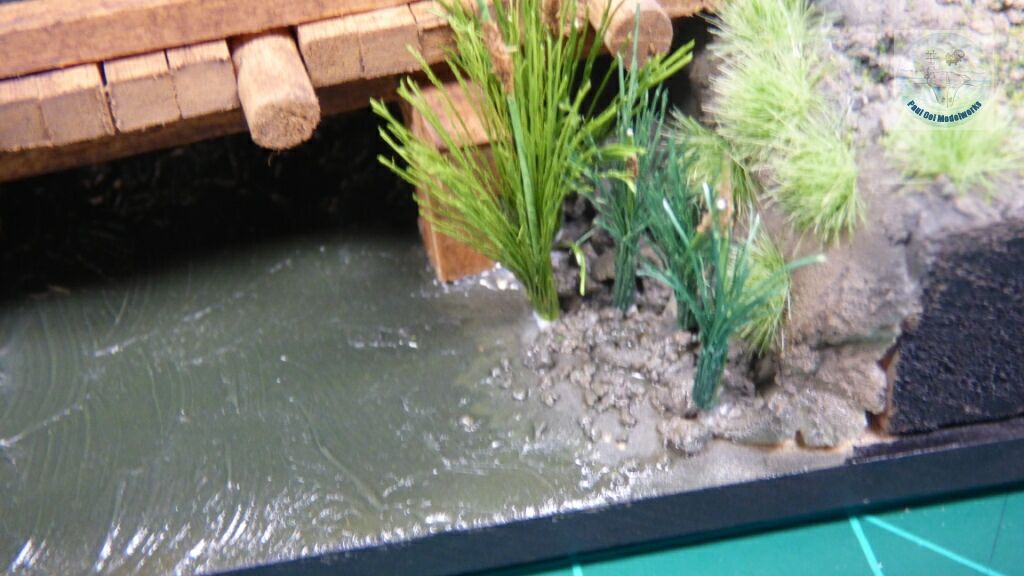
Detail of the river “flowing” under the bridge

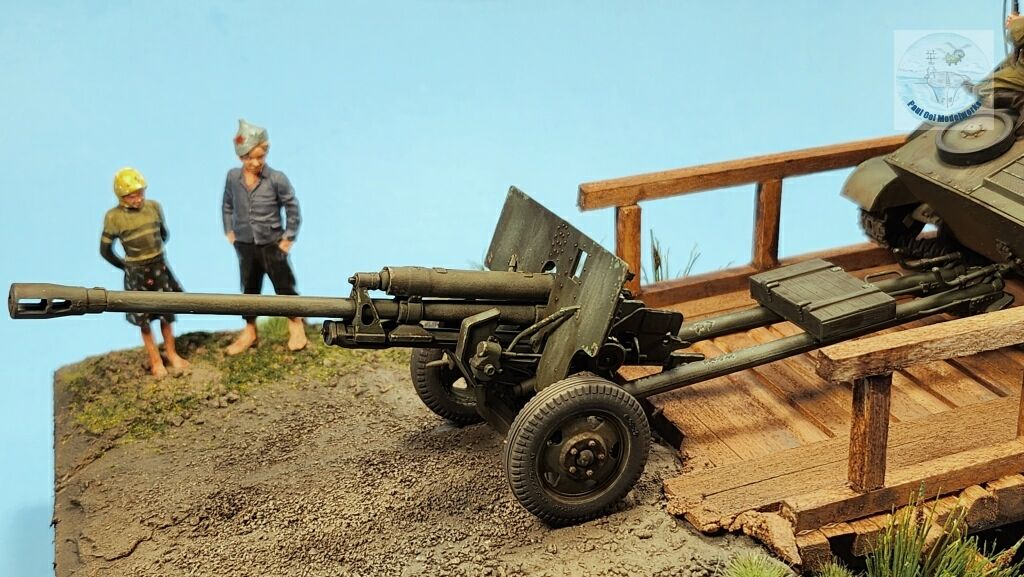
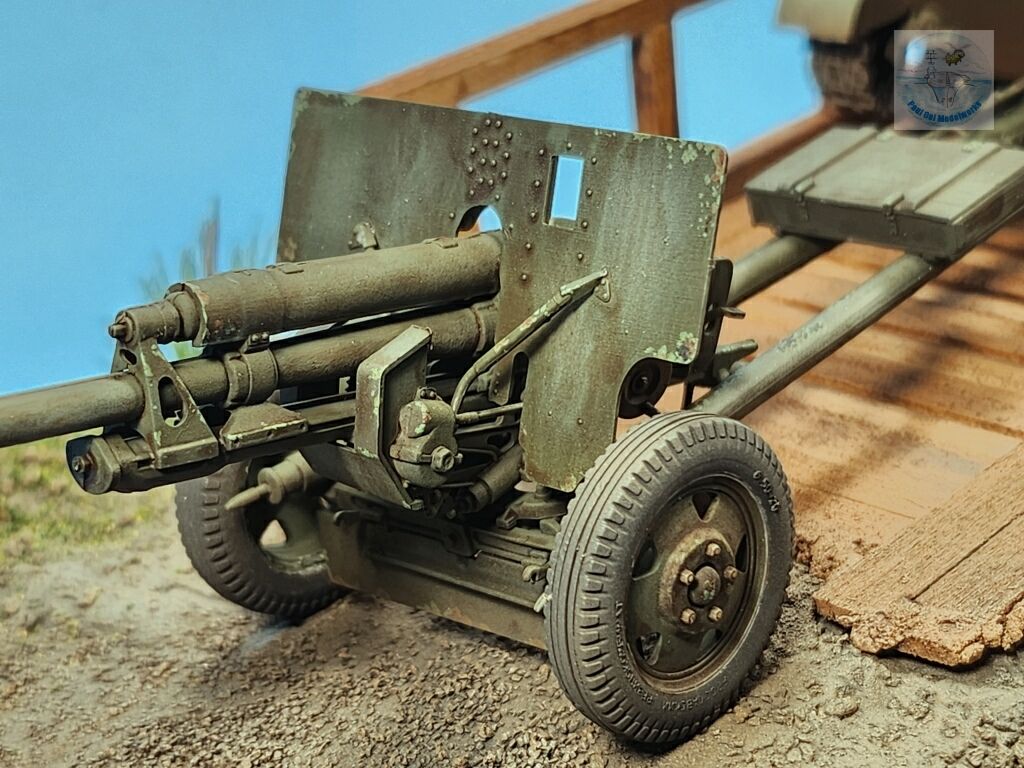
Close-up of the recoil mechanism of the ZiS-3

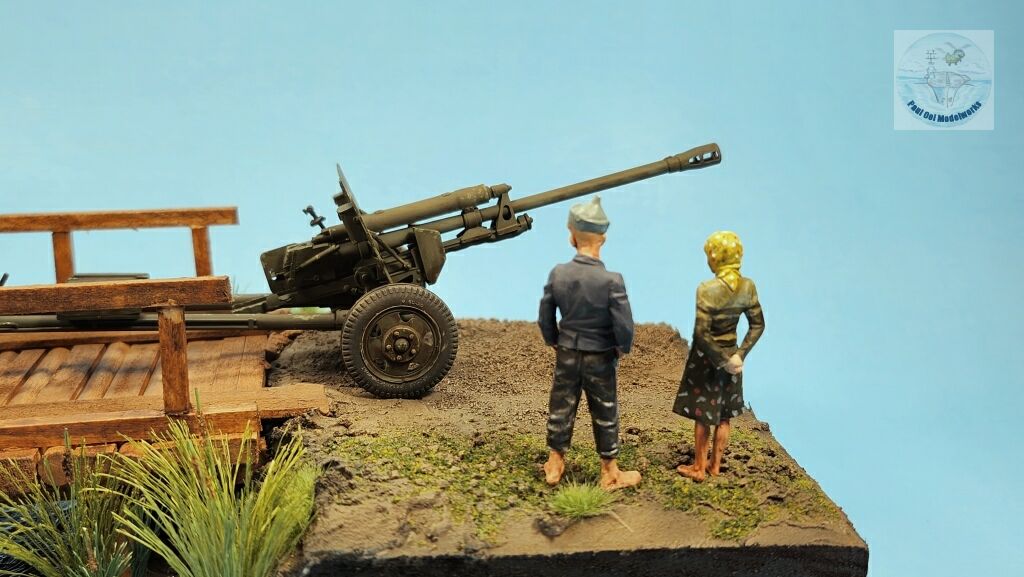
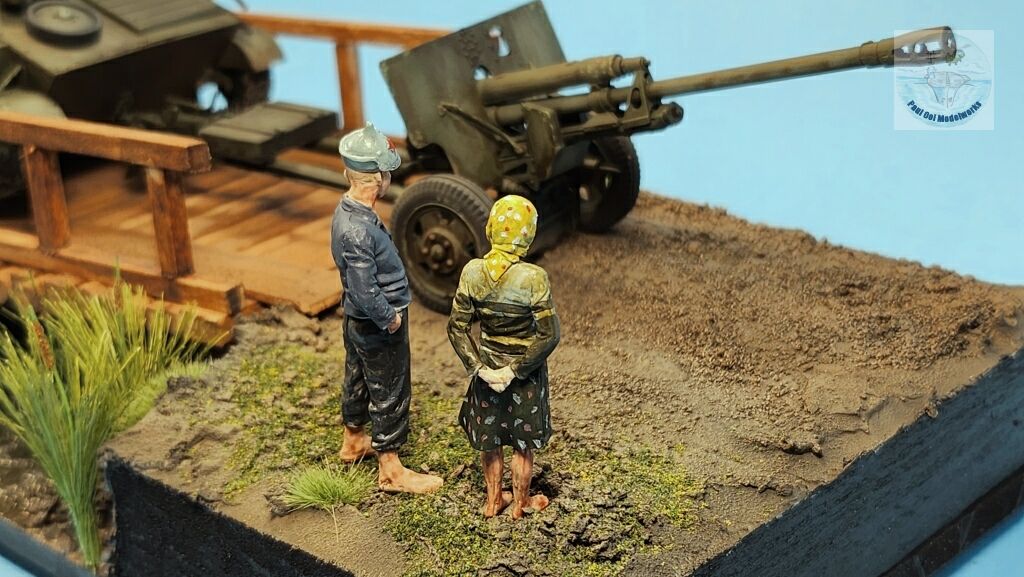
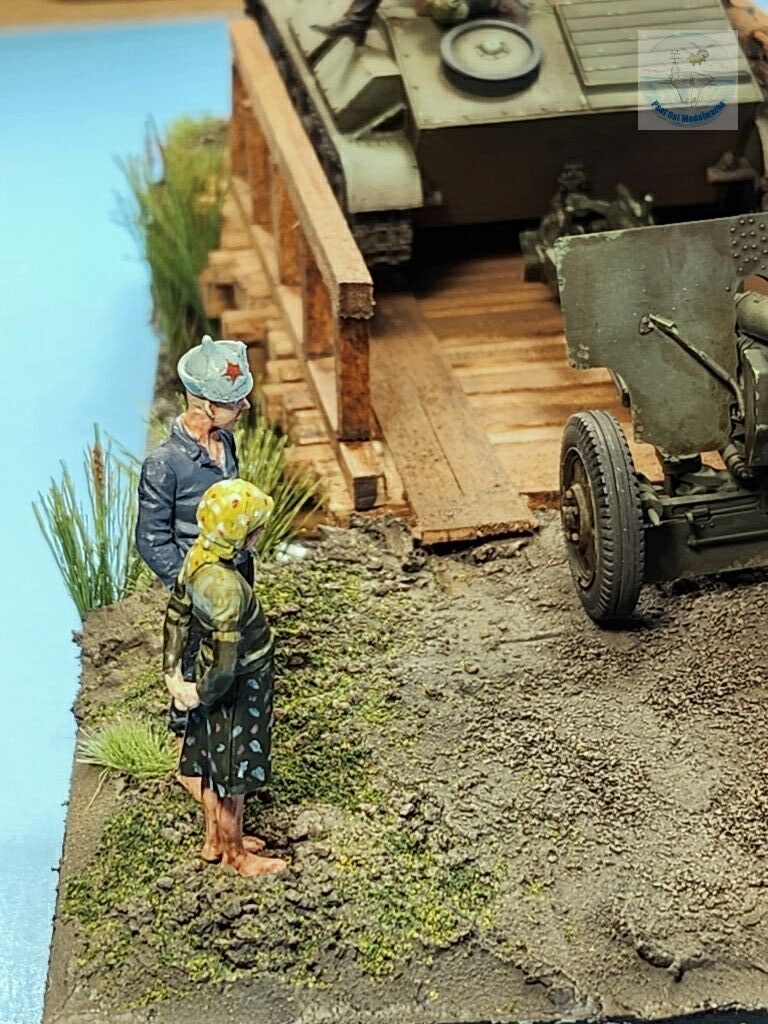
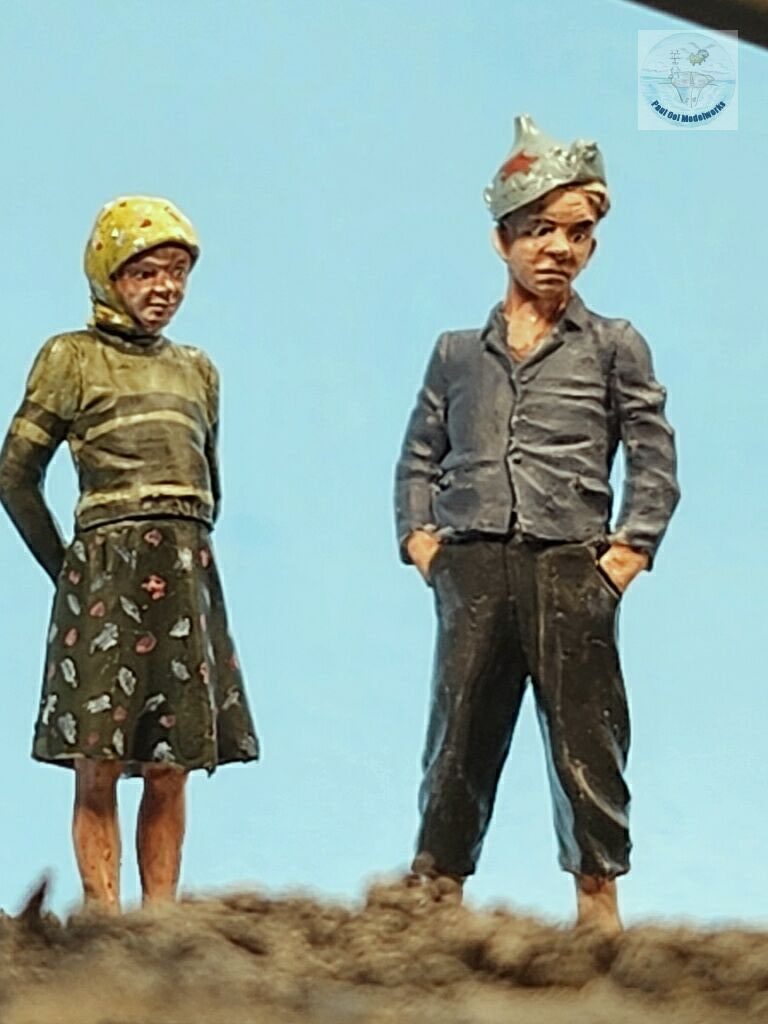
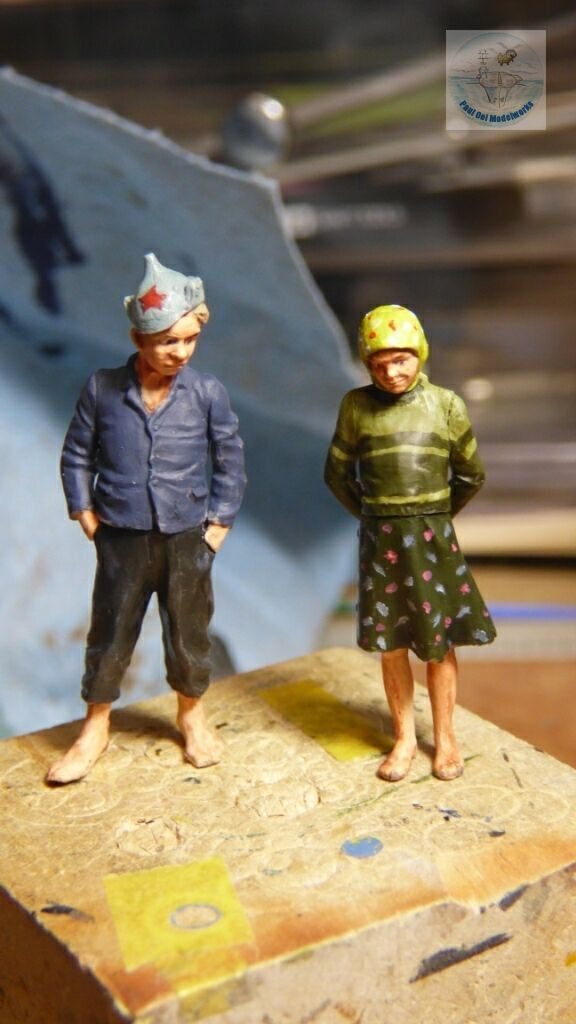
“Sasha and Ludmila”, our Soviet Hansel and Gretel

Construction Notes
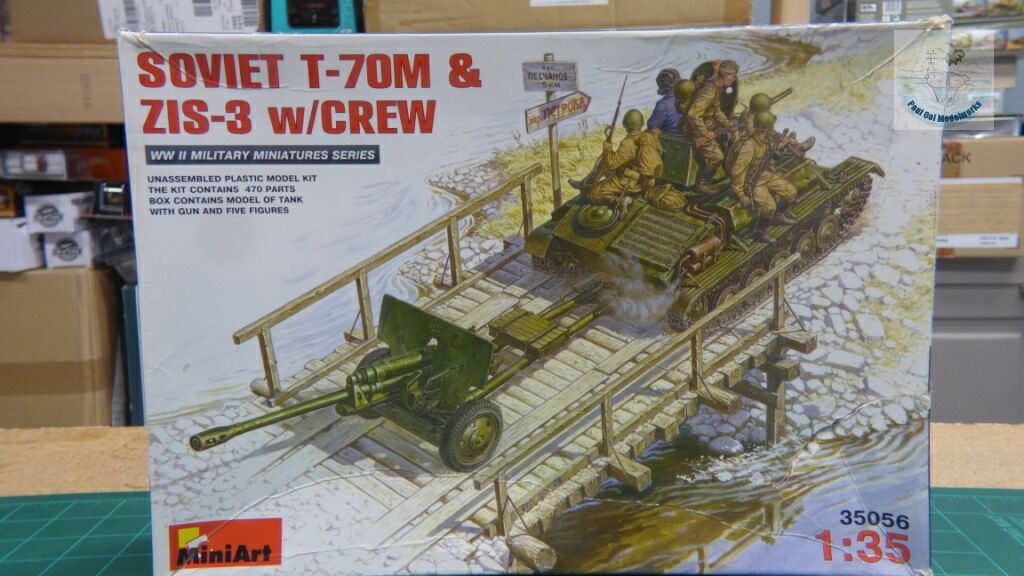
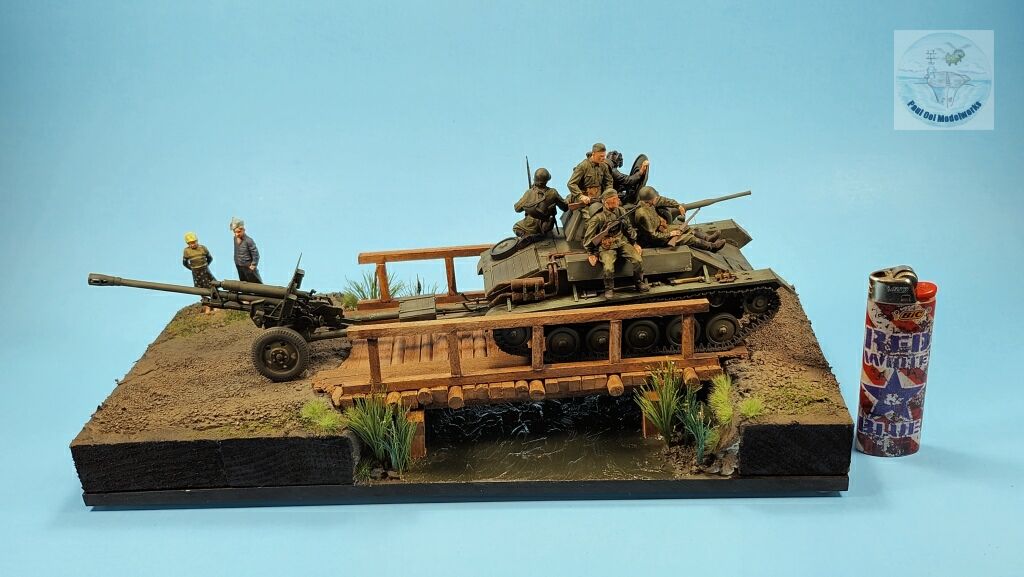
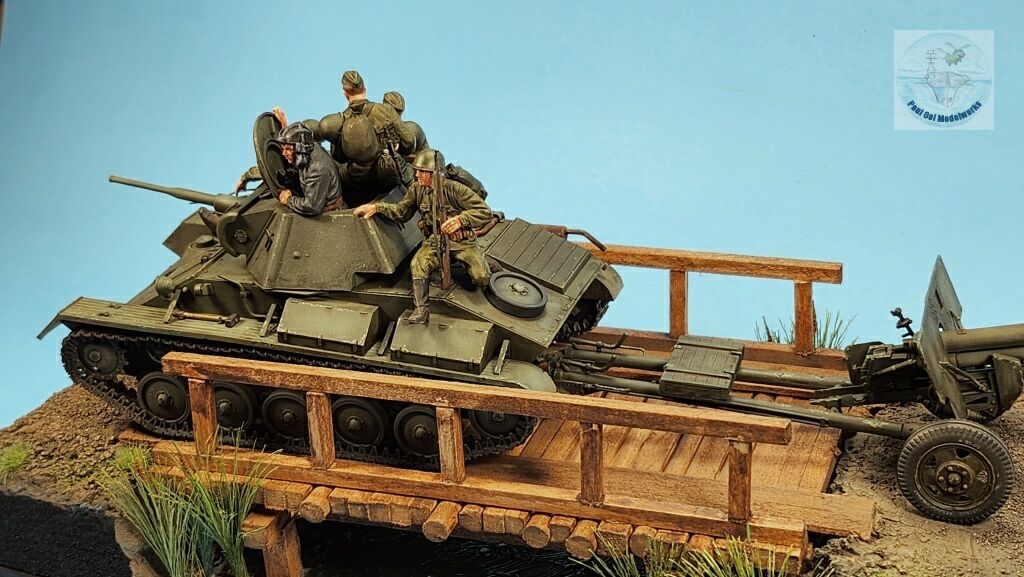
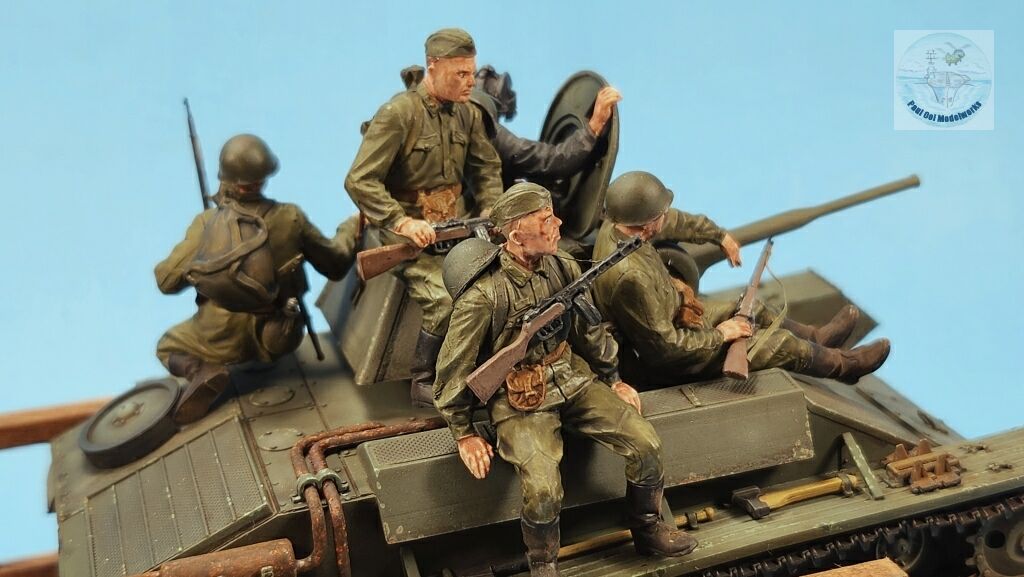
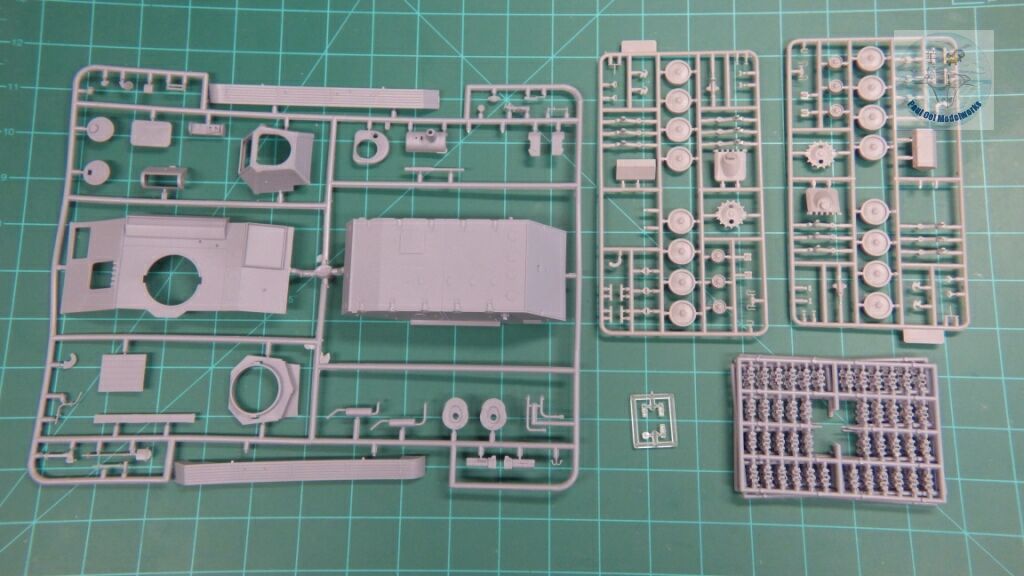
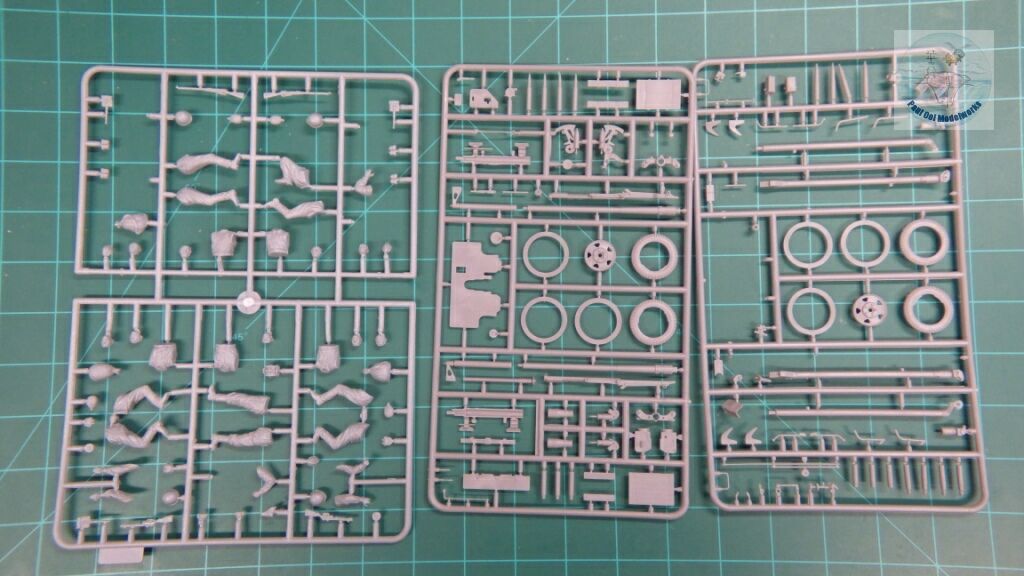
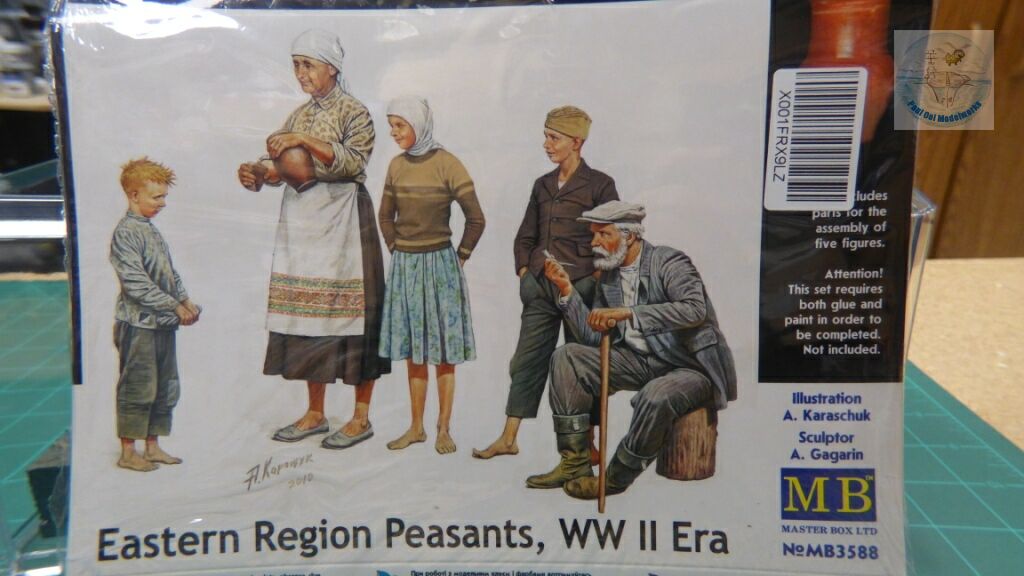
I came across this pre-owned MiniArt (Ukraine) kit of the T-70M combined with the ZiS-3 field gun and its crew riding on the tank. I was captivated by the bridge crossing scene of the box art and decided to build this diorama as part of the current series of Light and Mighty Tanks of WW2. I also bought the Master Box kit of Russian civilians in suitable period clothes to provide some interest in the diorama. The kit itself is very detailed and for most part, the molding was very detailed. However, some of the parts are very delicate and were easy to break while being snipped off the sprue. Also, there were a few parts that were insufficiently molded and had missing sections. However, these were minor and I could remedy them easily with stretched sprue. The fit was fair, and so some experience would be needed to build this kit. Also, the tracks are of the dreaded individual-links-only variety and will require the patience of a jeweler to assemble.

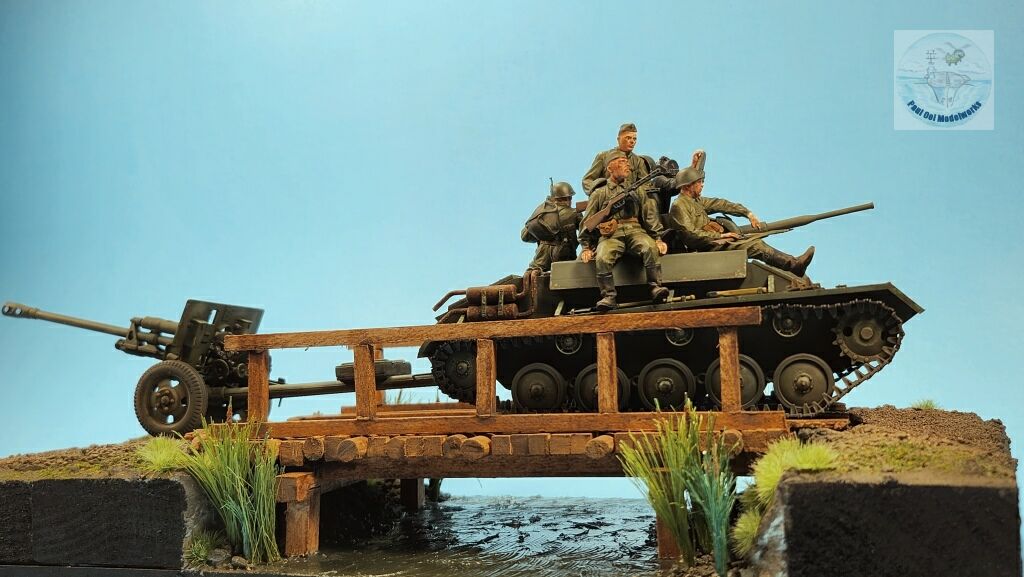
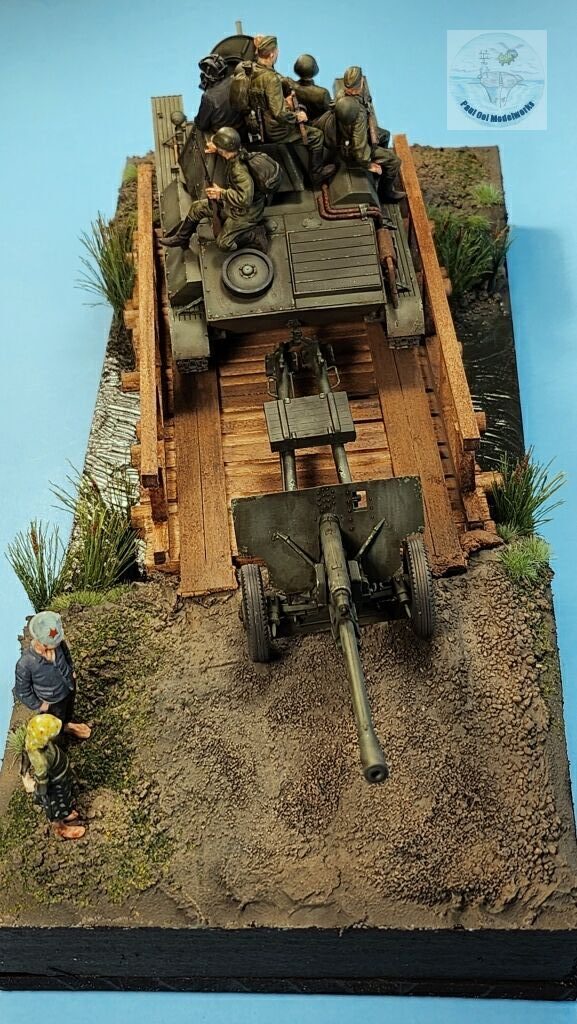
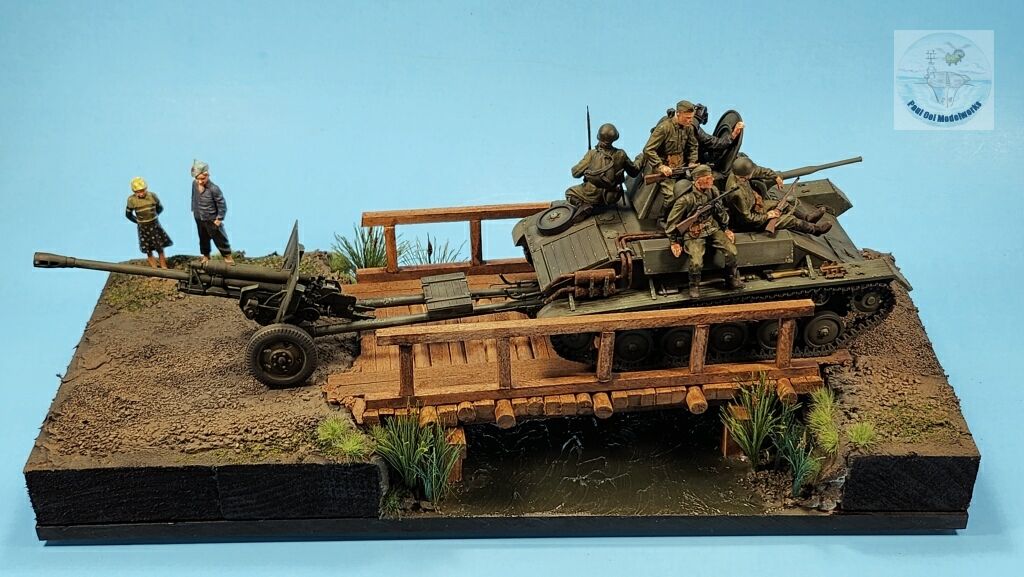
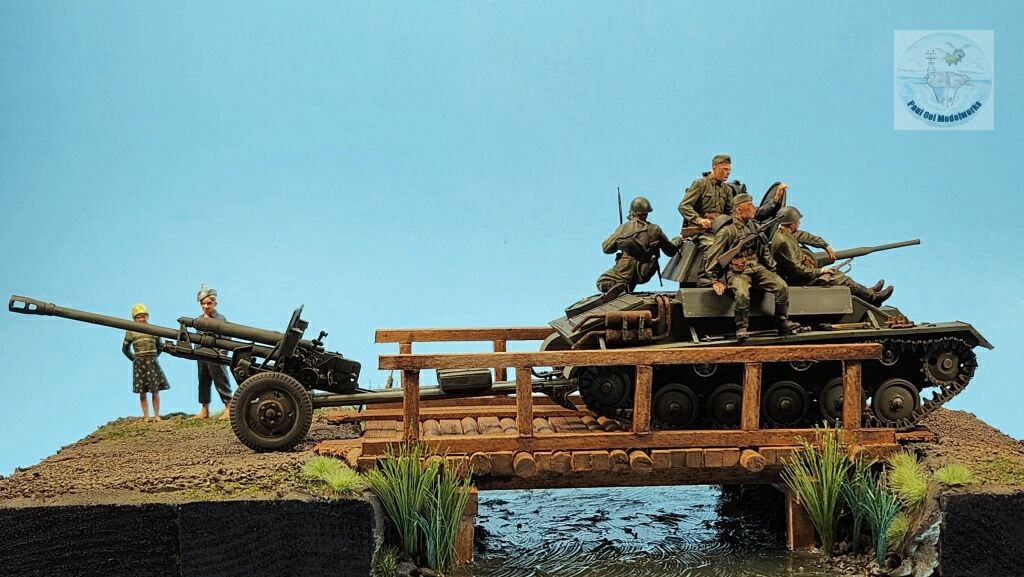
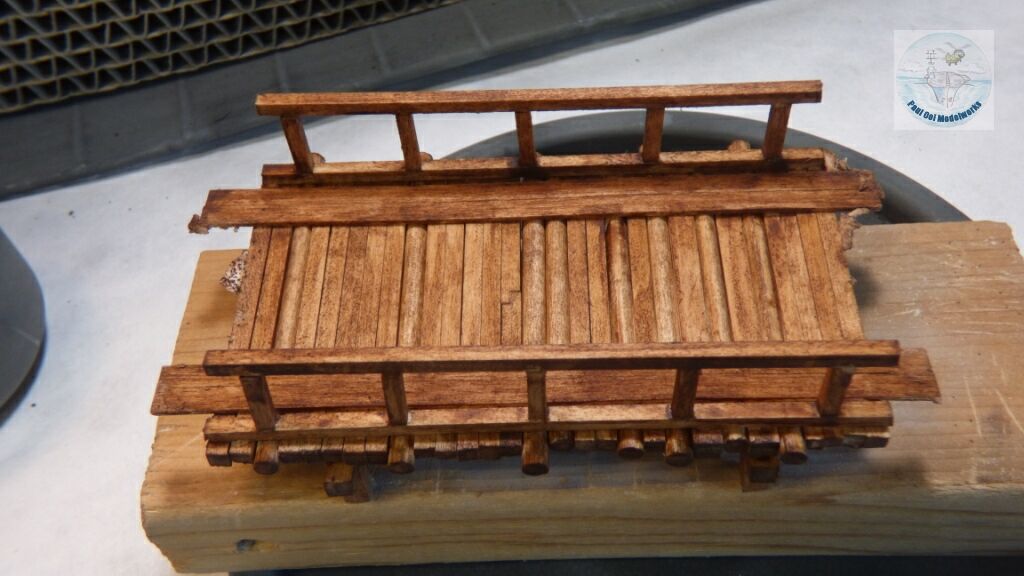
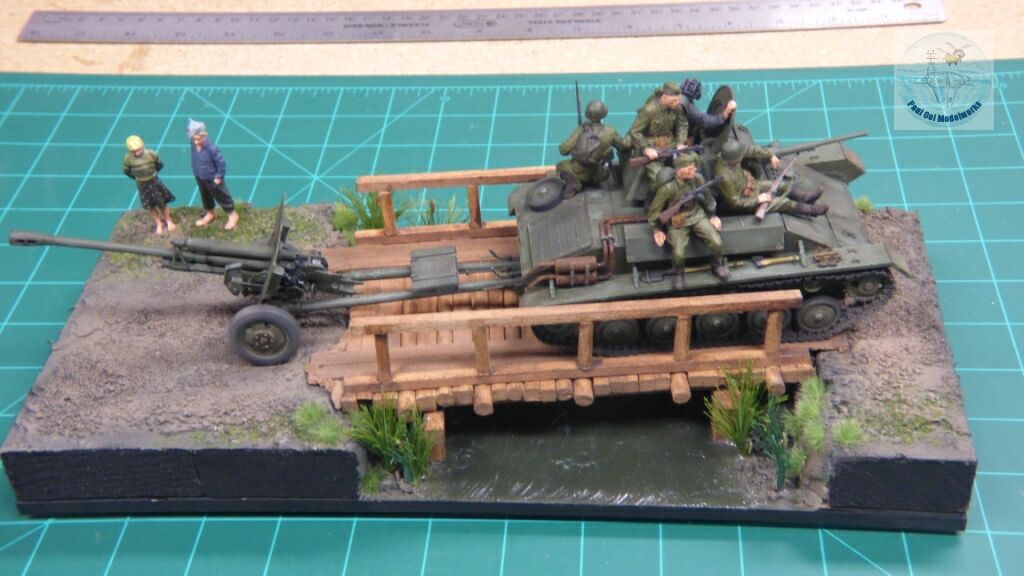
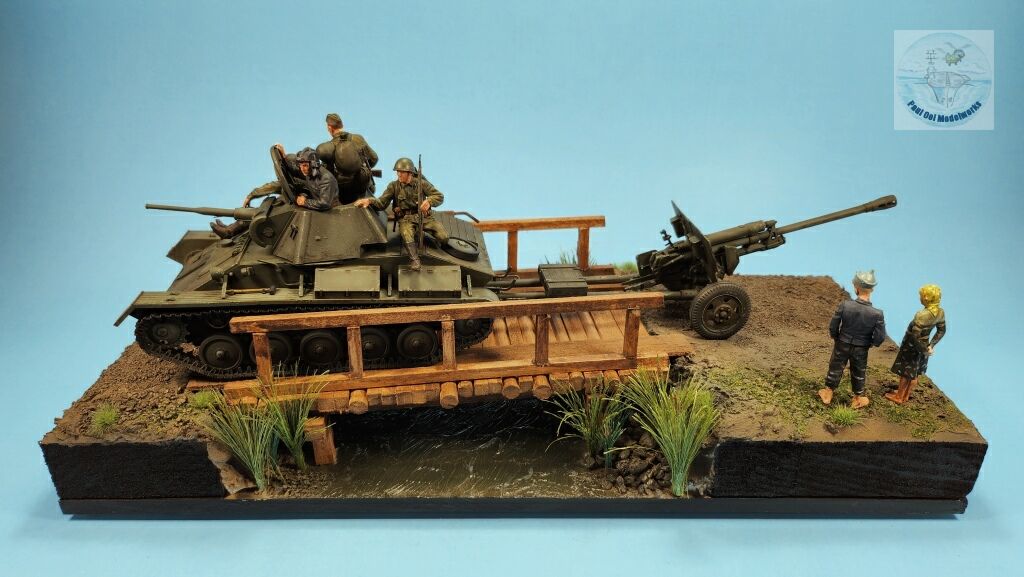
I wanted to portray a field gun being pulled by the tank over a small country bridge while being watched by two curious village kids. Such crossings were common as the Soviets attempted to push across the Dniepr in the summer of 1943, and the region was crisscrossed with multiple streams and tributaries of that main river. The bridge itself is scratched-built from bass wood and balsa, and it will be shown step-by-step in Tutorial 17 on Bridge-building.
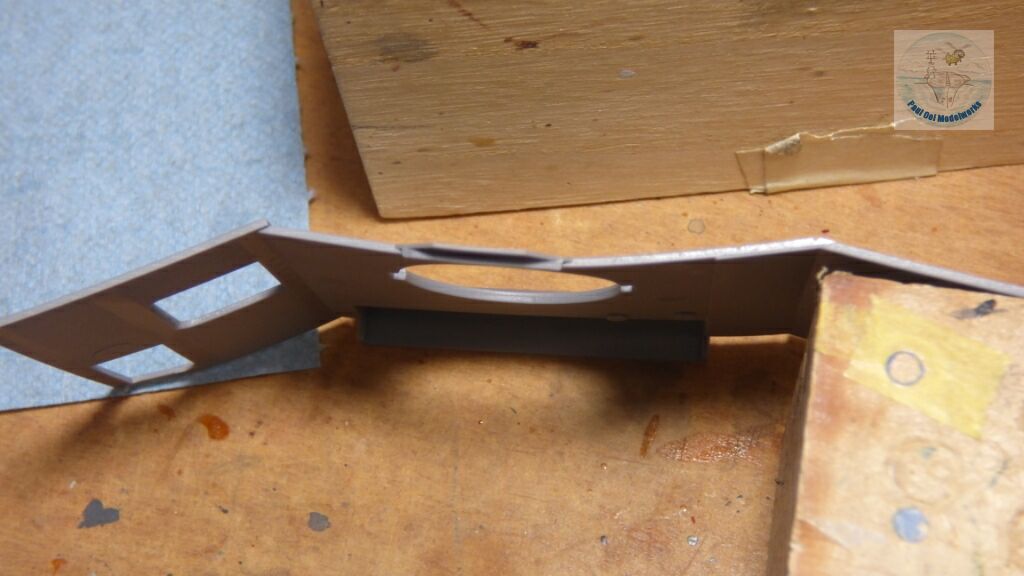
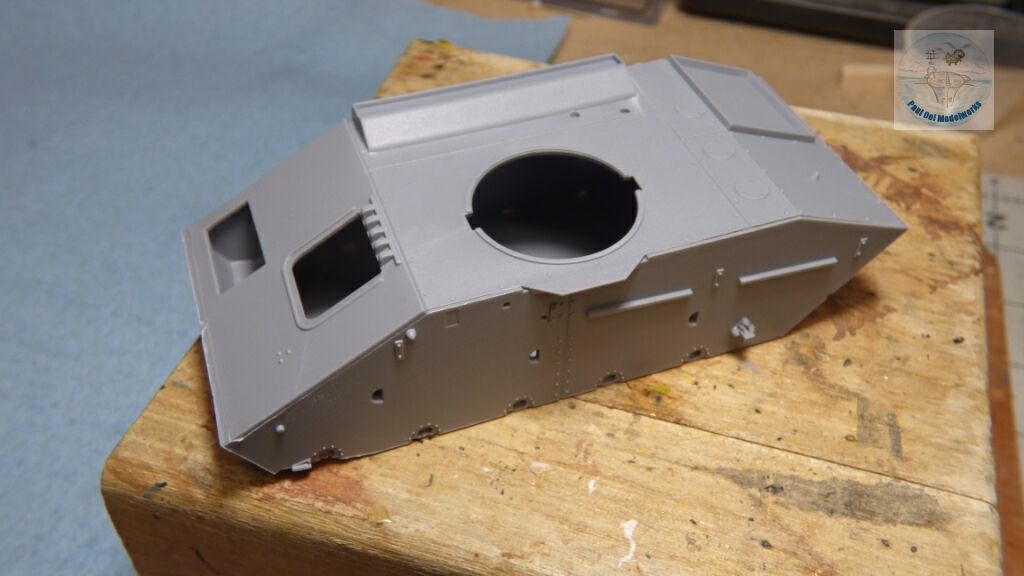
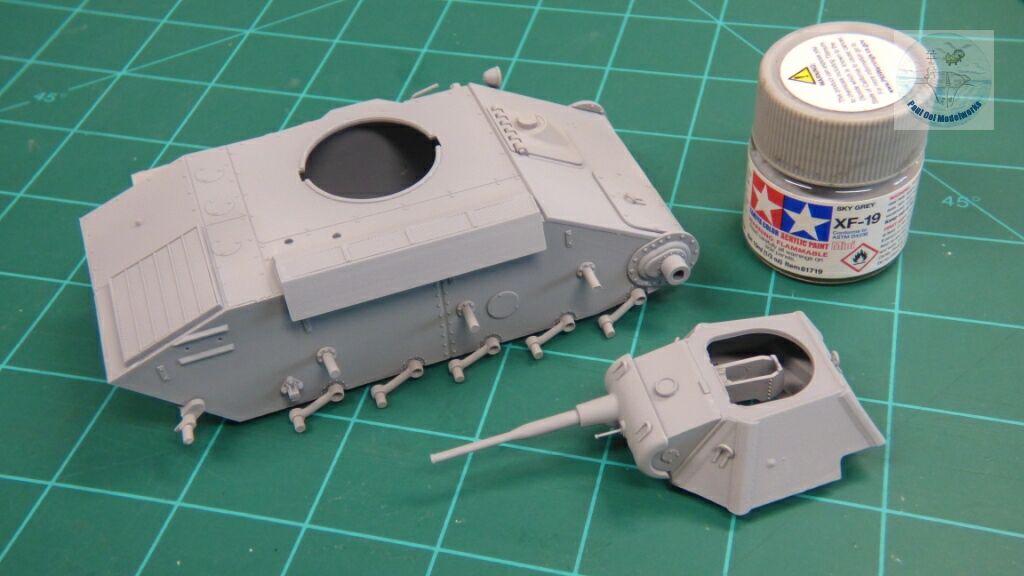
The top deck of the main hull was badly deformed by previous handling. I carefully straightened out the deck by immersing in mildly warm water (not hot!) just to relax the part enough to be malleable. Tricky business.
Building the hull is the first step. The warped top deck made this a bit more challenging but the actual mating surface fit was good, once I progressively bonded the edges of the top deck.


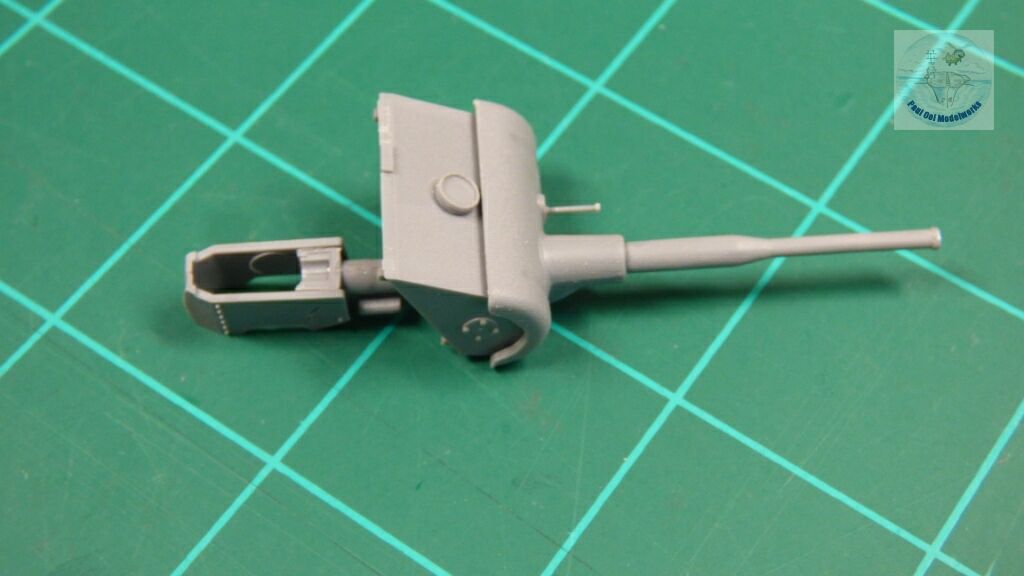
Next, I build the main gun assembly and mantlet . Careful to keep glue off the side pivot points to keep the elevation movement.
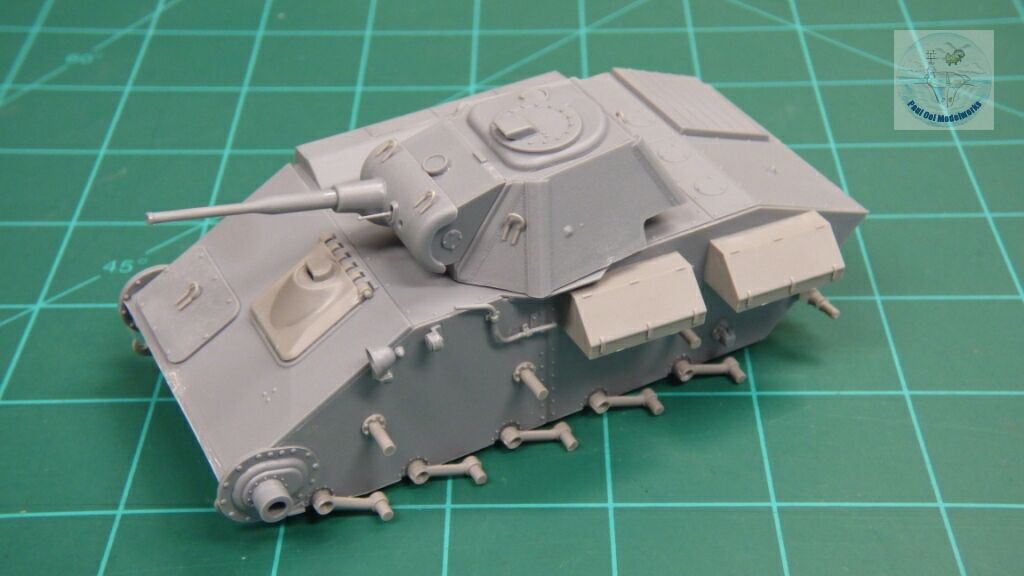
The whole main hull assembly is very fast as the outer surface of this tank was relatively uncluttered. I left off the road wheels and the exhaust mufflers as these would be painted separately.


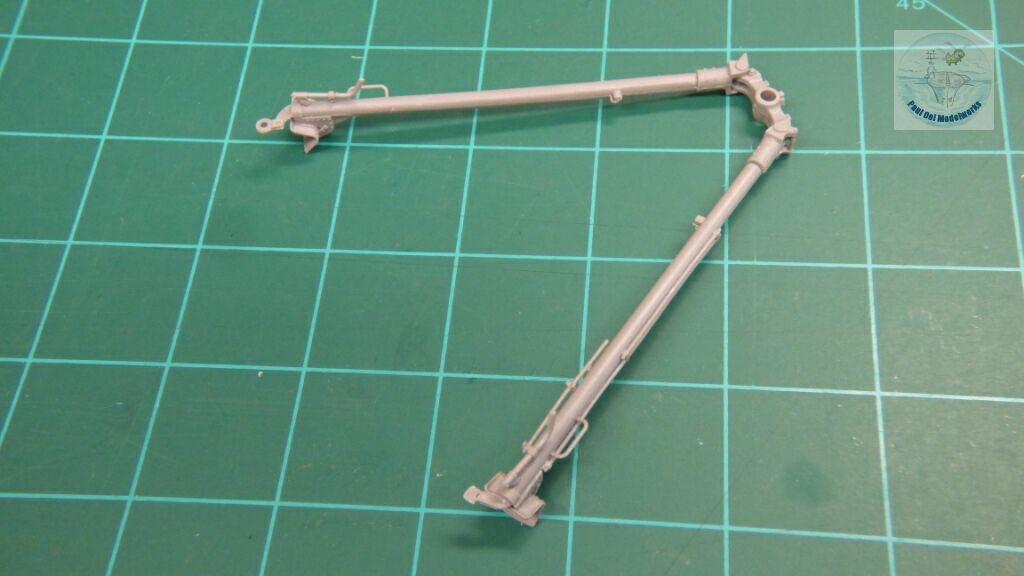
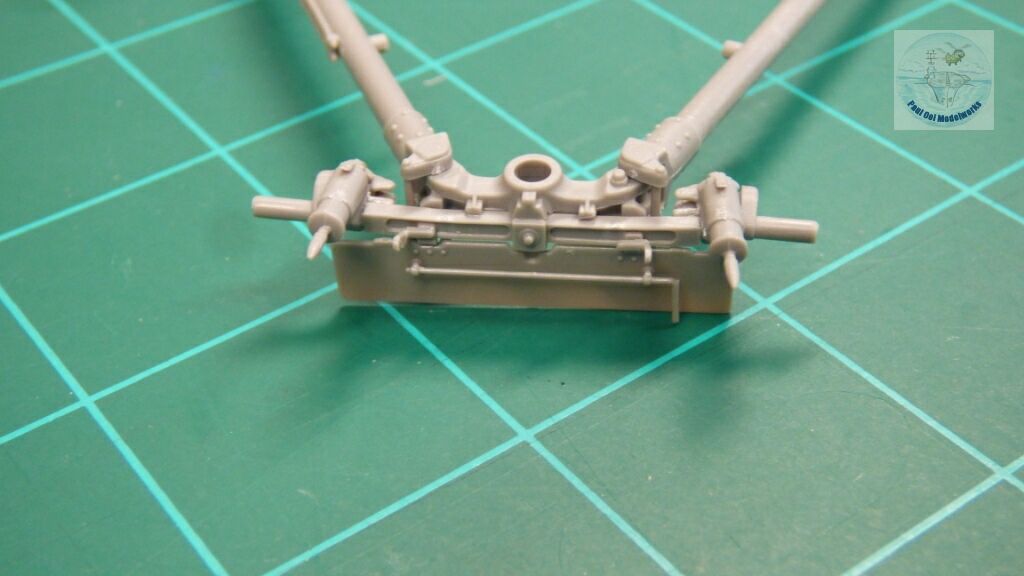
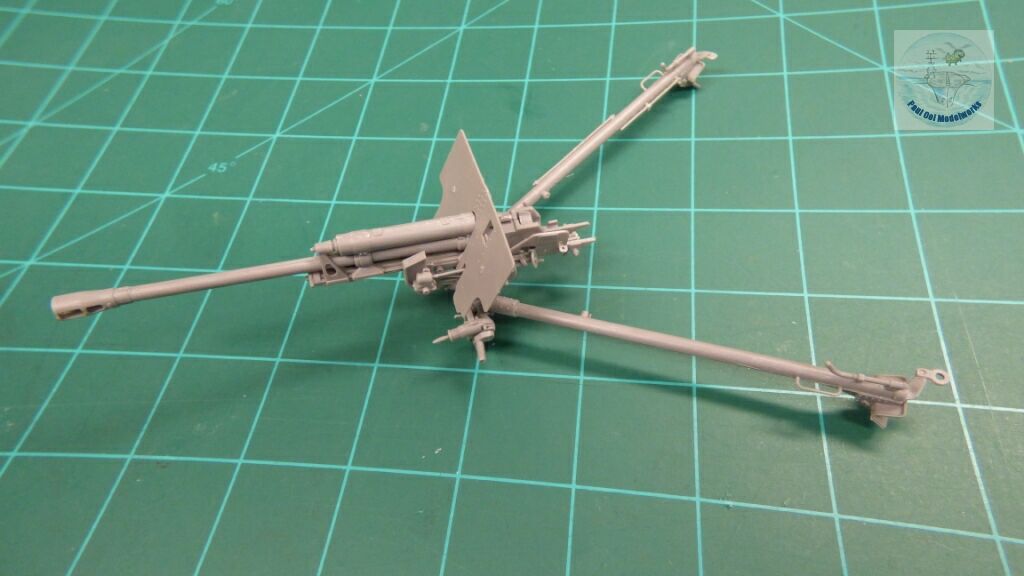
Next, I start working on the field gun. We start with the trail assembly arms. These need to be able to pivot (for now).
The forward shield of the trailer assembly and wheel axle is built.
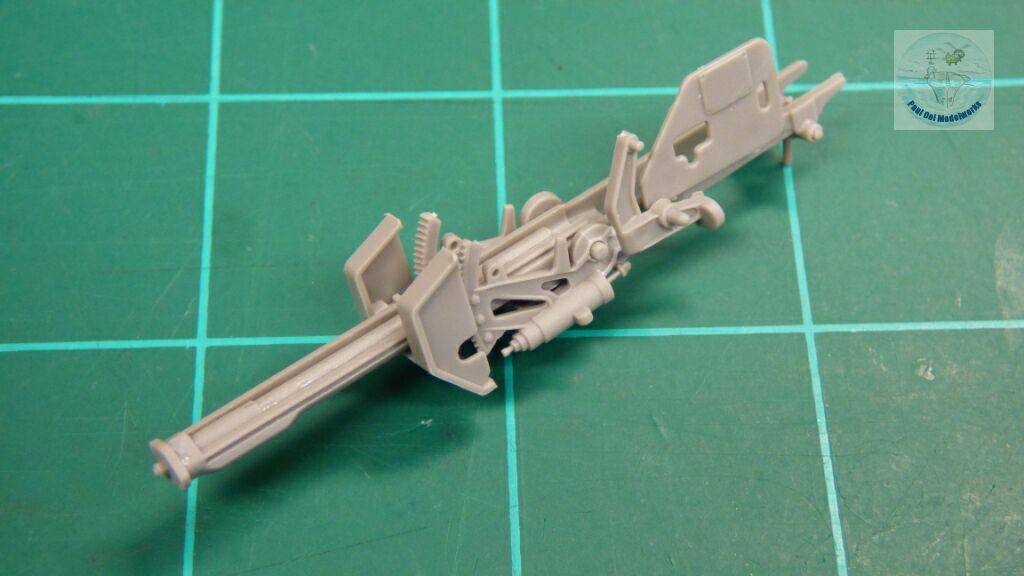
The gun cradle assembly is a busy place that requires careful attention as the parts are fragile and small.
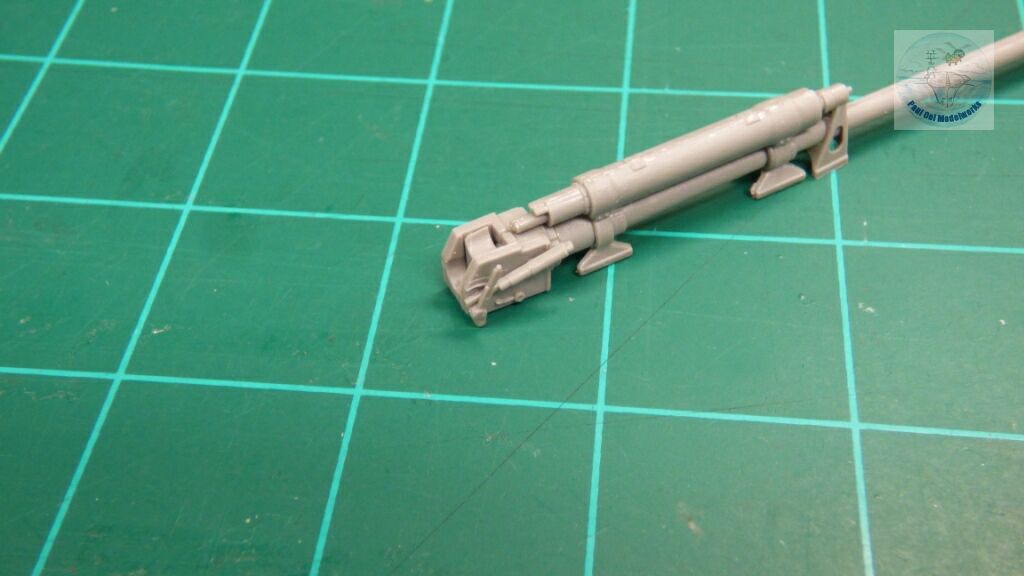
The gun ordnance and recoil tube are next. The kit instructions suggest leaving the recoil tube movable but the halves leave a seam gap that needed sealing, so I had to glue it shut in its transport position.


The gun shield attaches to the cradle and then that top assembly pivots on a hole in the trailer assembly. I left off the two wheels for painting.
 

We start the painting process with a primer layer of Tamiya XF-19 Sky Grey.


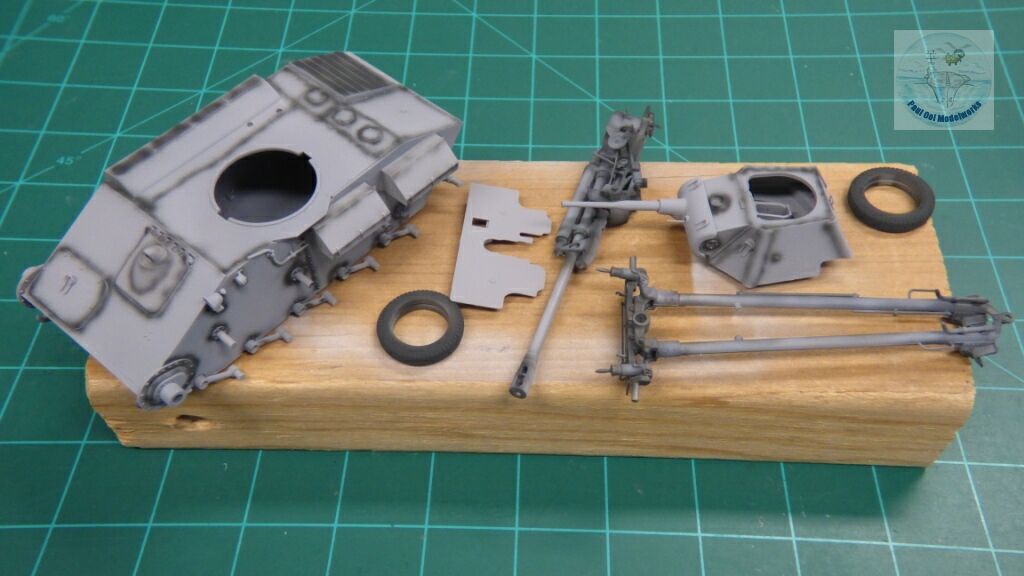
Undershading of Tamiya NATO Black XF-69 and also for all tires and road wheels.
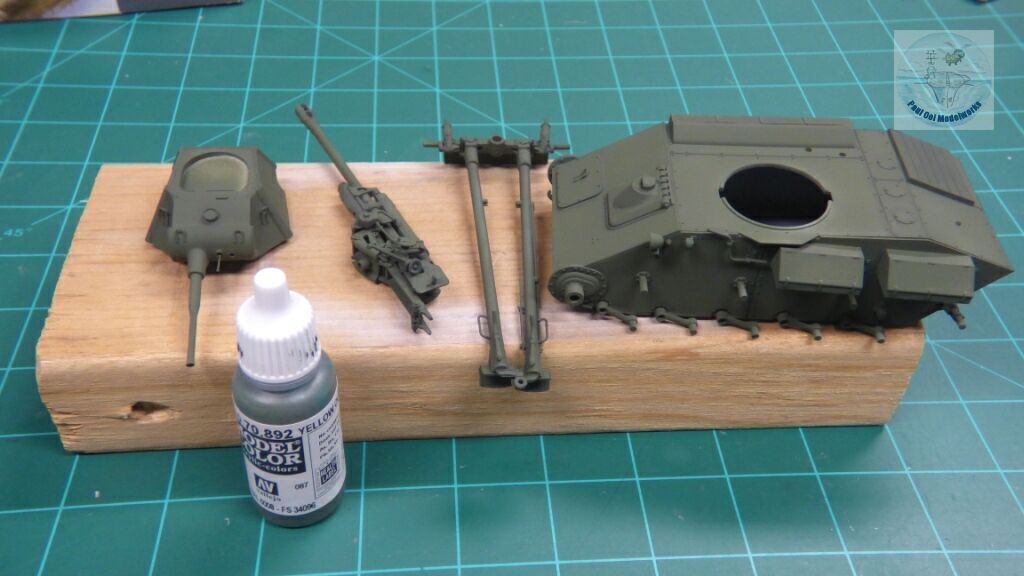
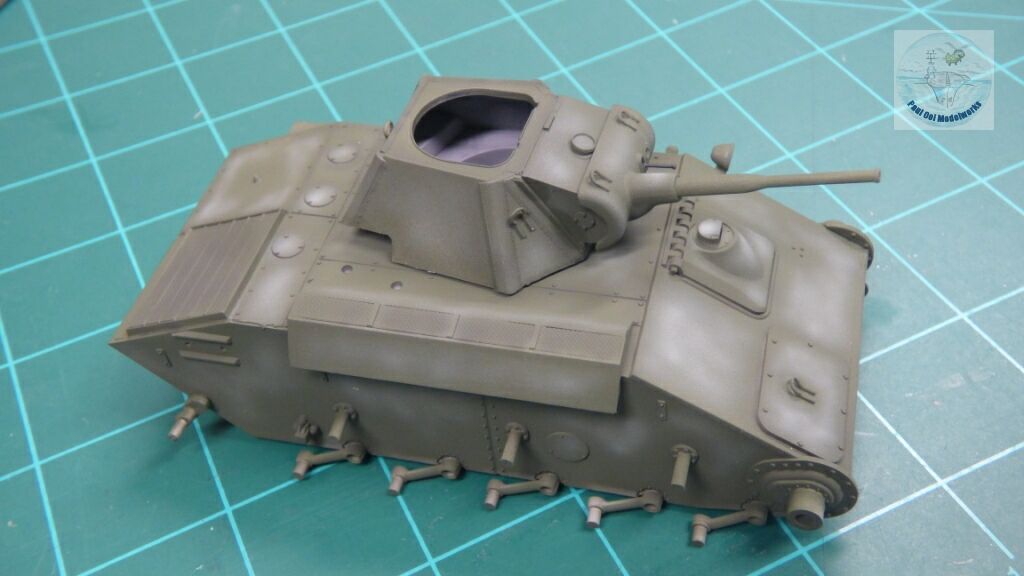
The main color used was Vallejo 70.892 Yellow Olive Green FS34096.
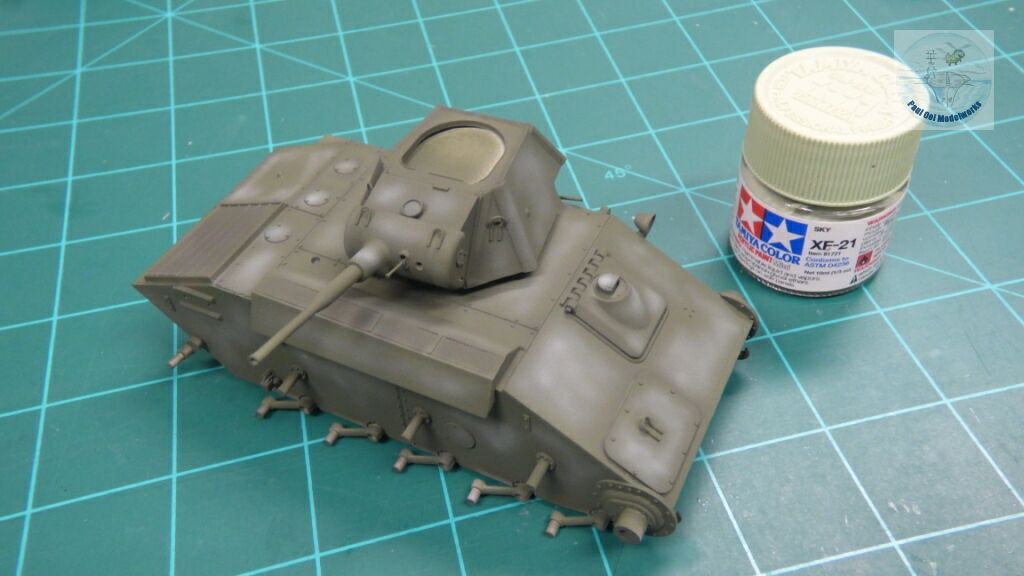
Highlights using Tamiya Sky XF21. It looks patchy for now but we will get it blended together using the oil wash.
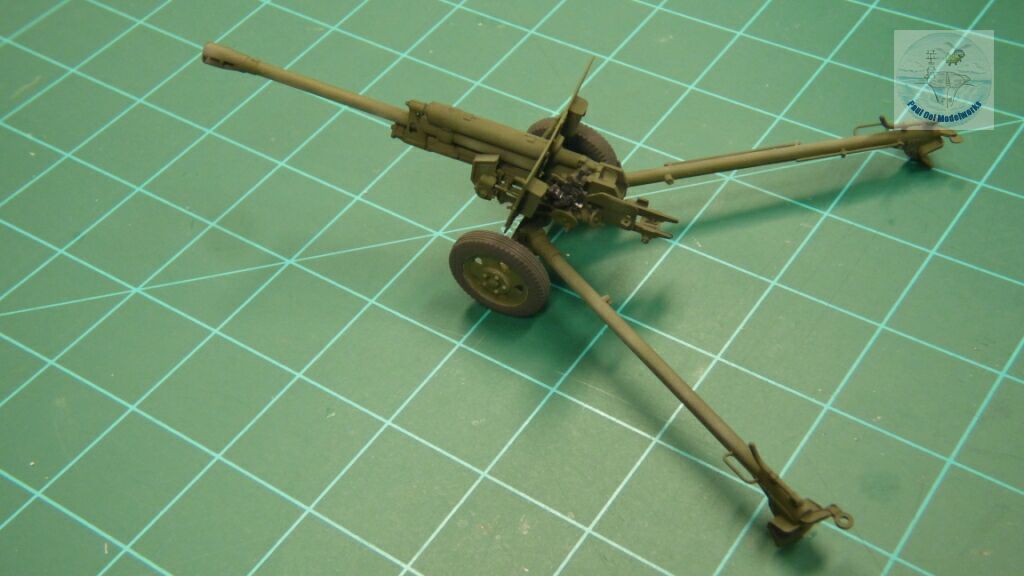
The wheels of the field gun are fitted onto the axle.
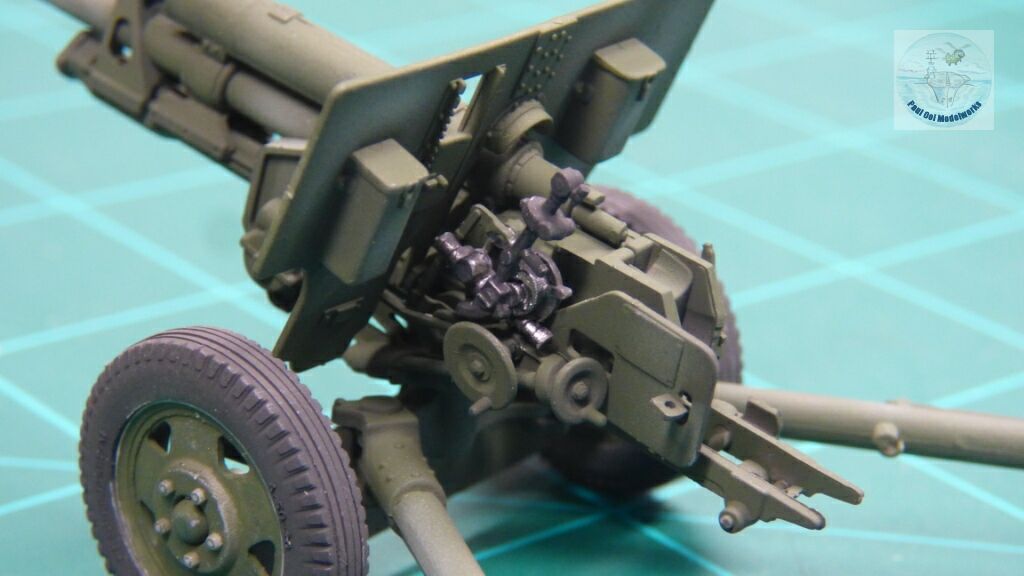
Close-up shot of the gunsight and elevation controls.
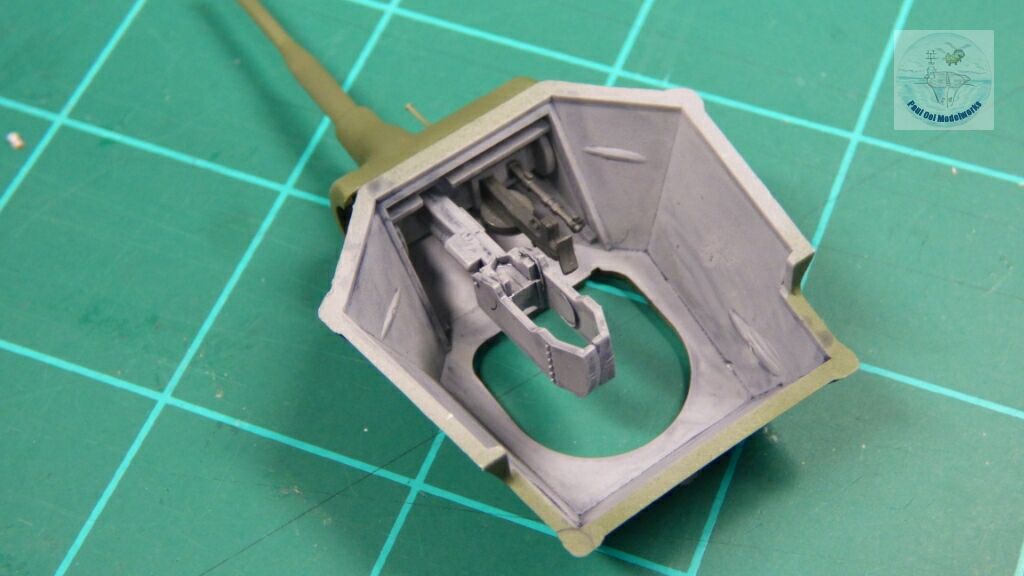
The interior surface of the turret and gun breech are painted with Tamiya Sky Grey XF-19. I applied an oil wash of Payne’s Grey to finish.
The turret assembly is now permanently fitted onto the hull.
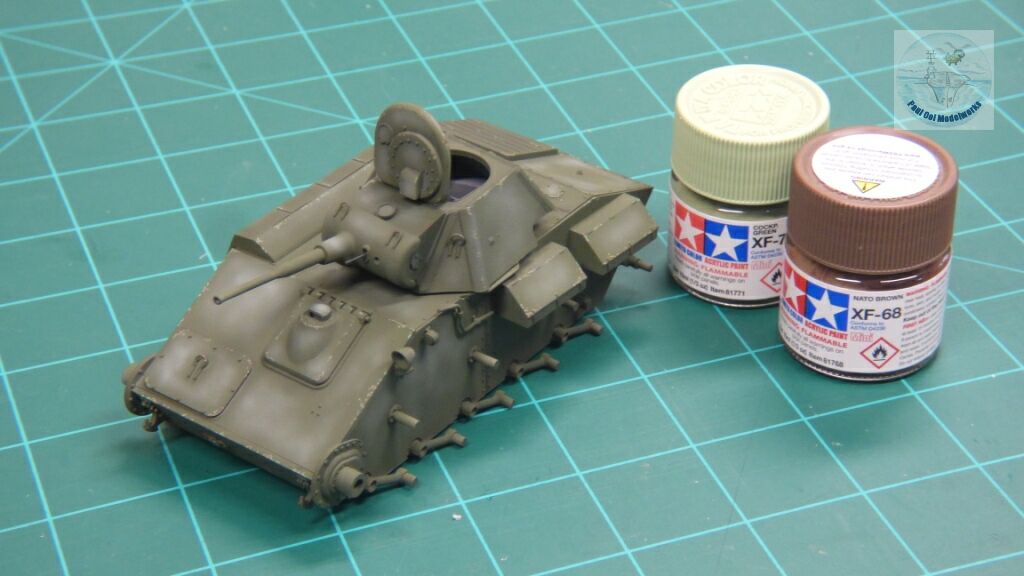
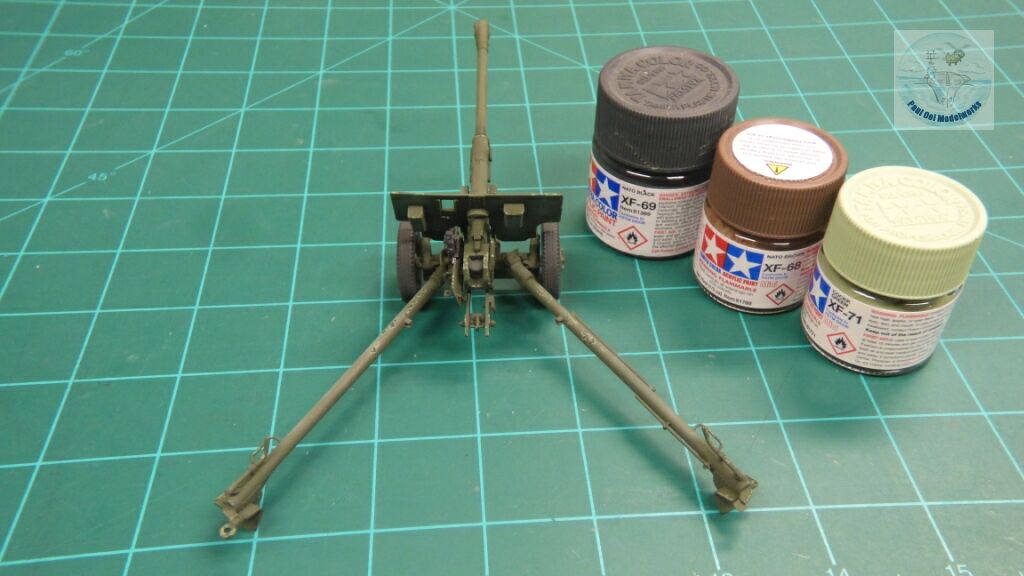
Chipping is done using Tamiya Cockpit Green XF-71 and NATO Brown XF-68.
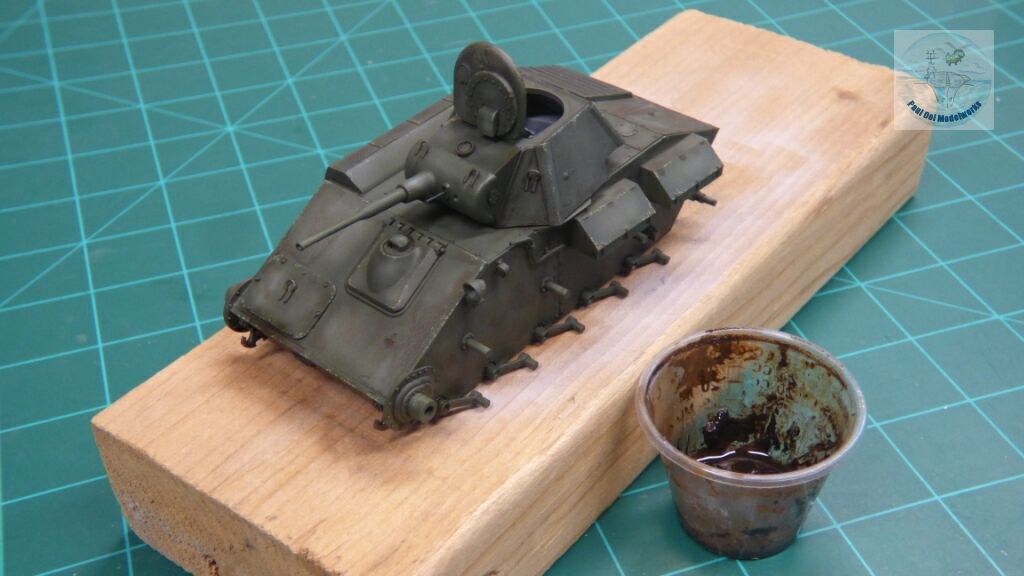
Since there are no decals, and the base layers are all in acrylic paints, I can directly apply the oil wash of Burnt Umber + Lamp Black 3:1 directly. This provides the heavy weathering effect, and blends the the previous paintwork together.
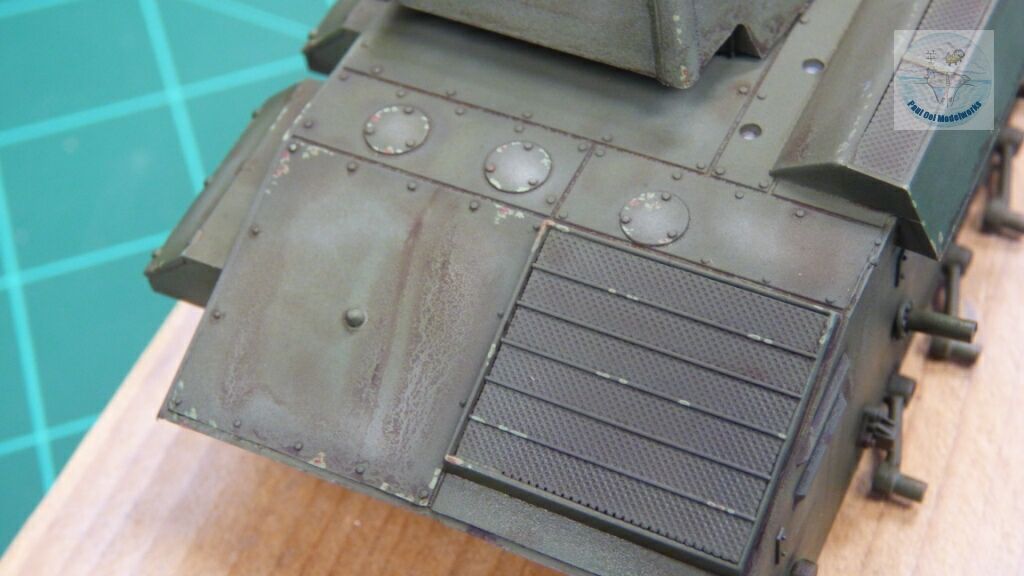
Close-up of the combination of undershading, chipping and oil wash weathering.
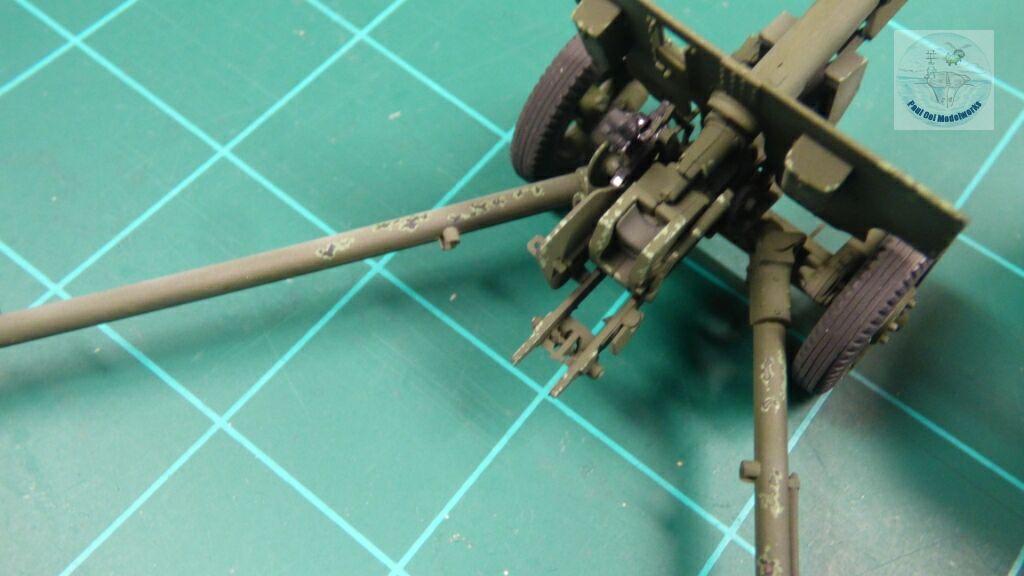
Chipping for the filed gun is done with Tamiya XF-69 NATO Black (for large exposed burnished areas where the gunners move and sit on), XF-71 Cockpit Green, and XF-68 NATO Brown.
Close-up of heavily worn and burnished areas.
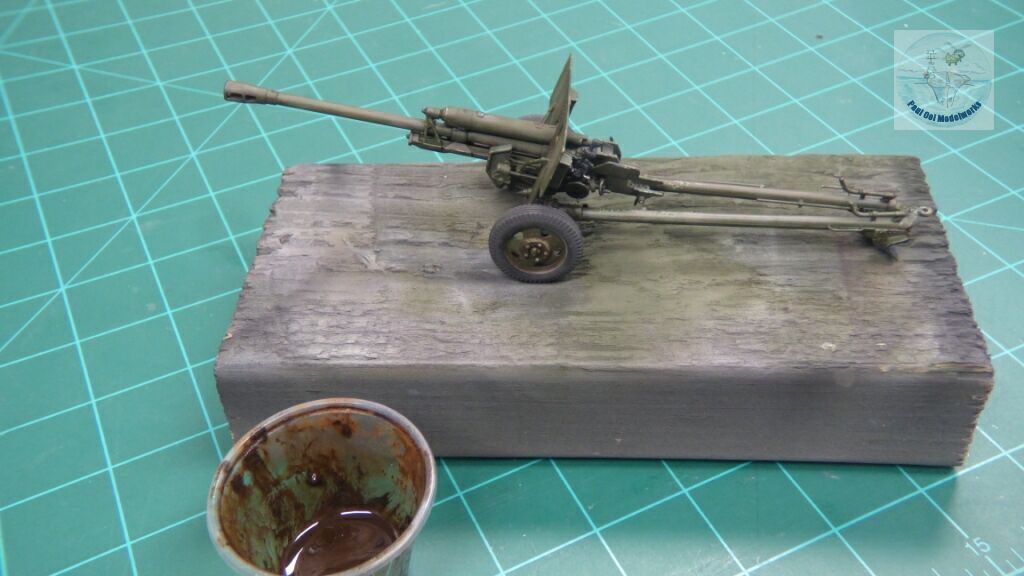
Oil wash of 3:1 Burnt Umber + Lamp Black for the field gun.
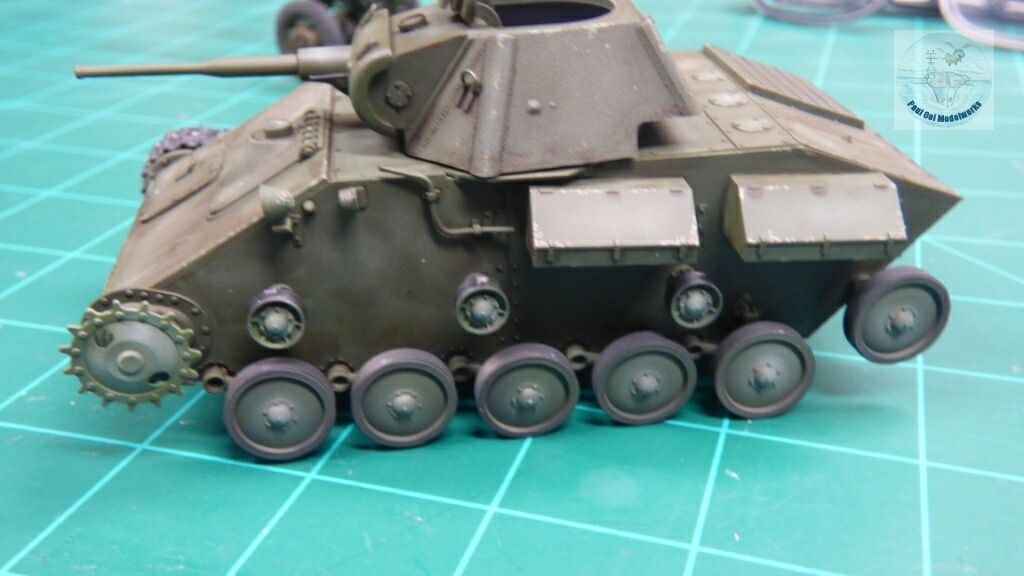
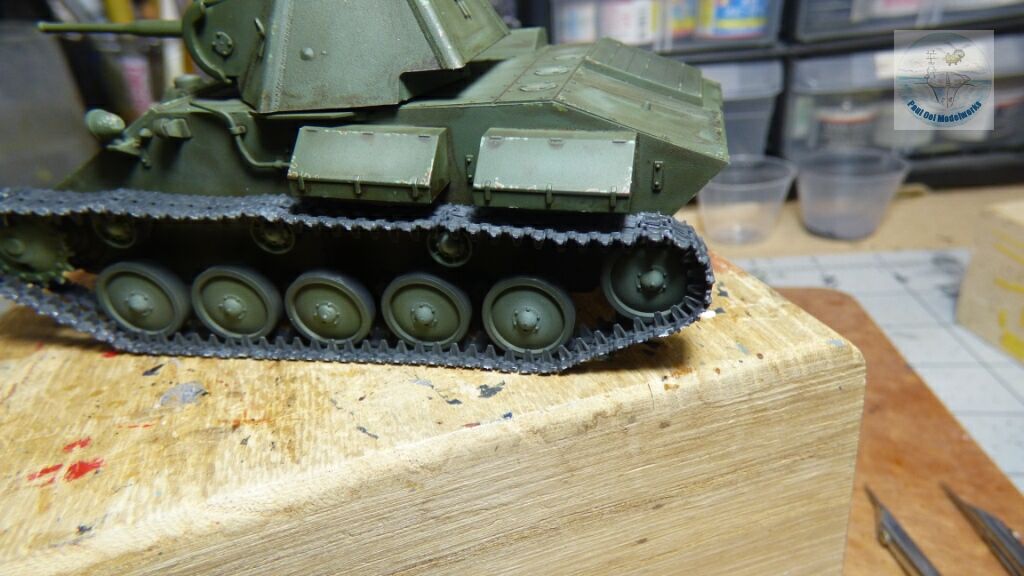
Adding the front sprocket, idler wheels and the road wheels onto the hull. The fit of the wheels to their spindles are not so good as the spindles tend to be slightly oversized. I drilled out some of the wheel holes to fit.
The tracks are fitted on using the technique in Tutorial 17 on how to fit single track segments. Note the sag of the tracks over the row of top idler wheels.
The fenders are fitted last only after the tracks have been fitted as the clearance between the top idler wheels and the fenders are tight.
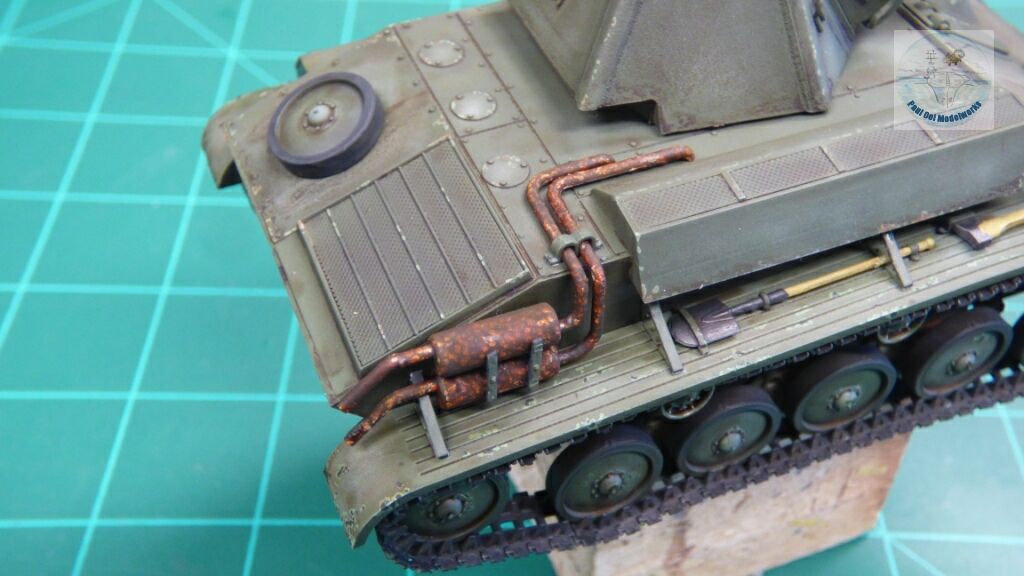
The twin mufflers are installed after painting using the technique from Tutorial 14.
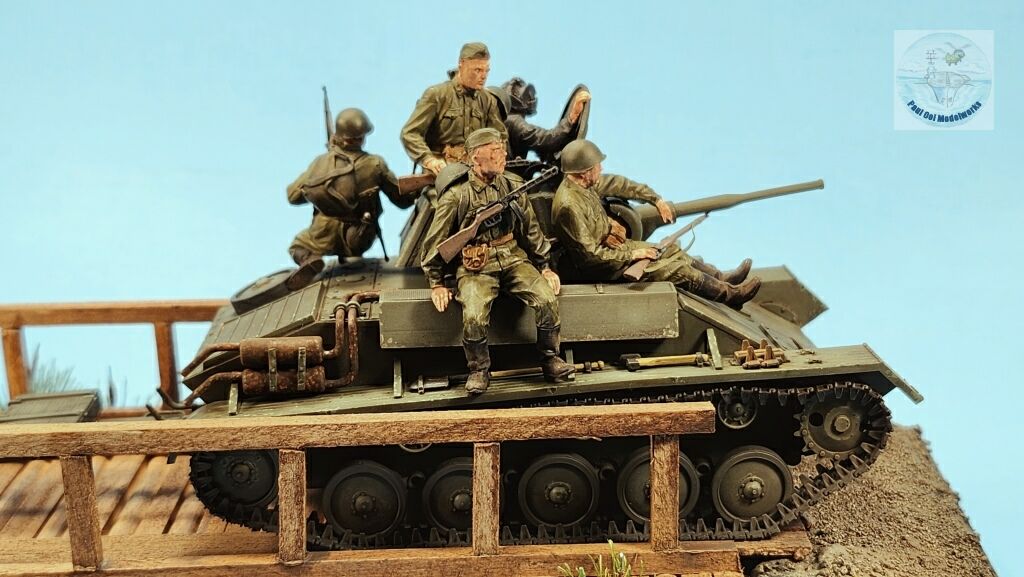
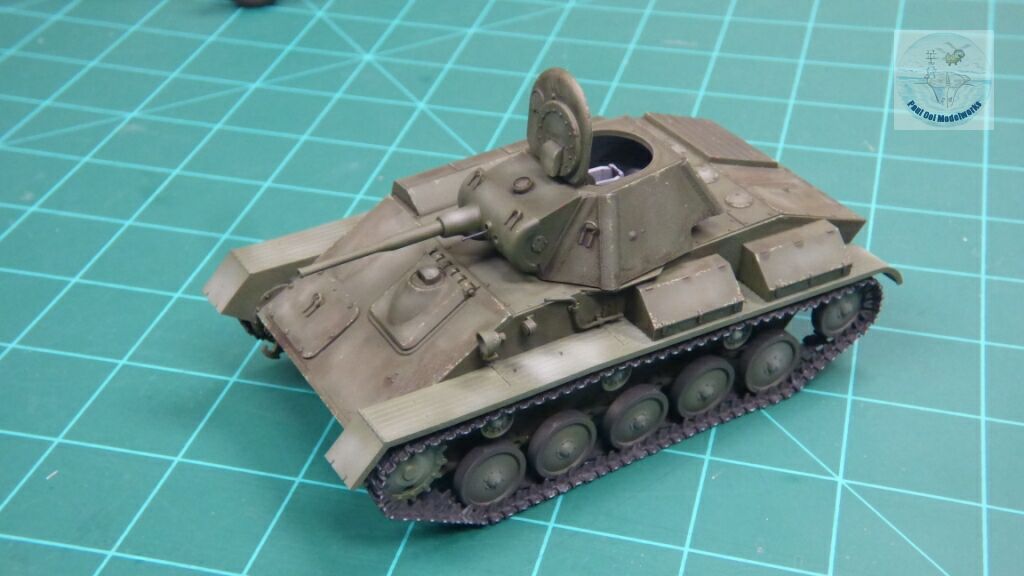
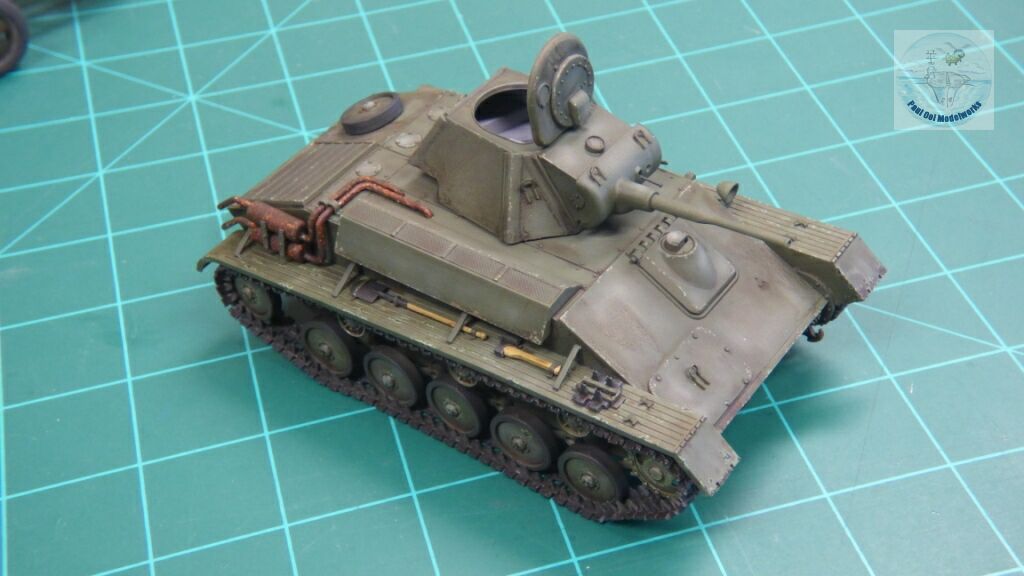
After adding in the stowed tools, the T-70M itself is complete.


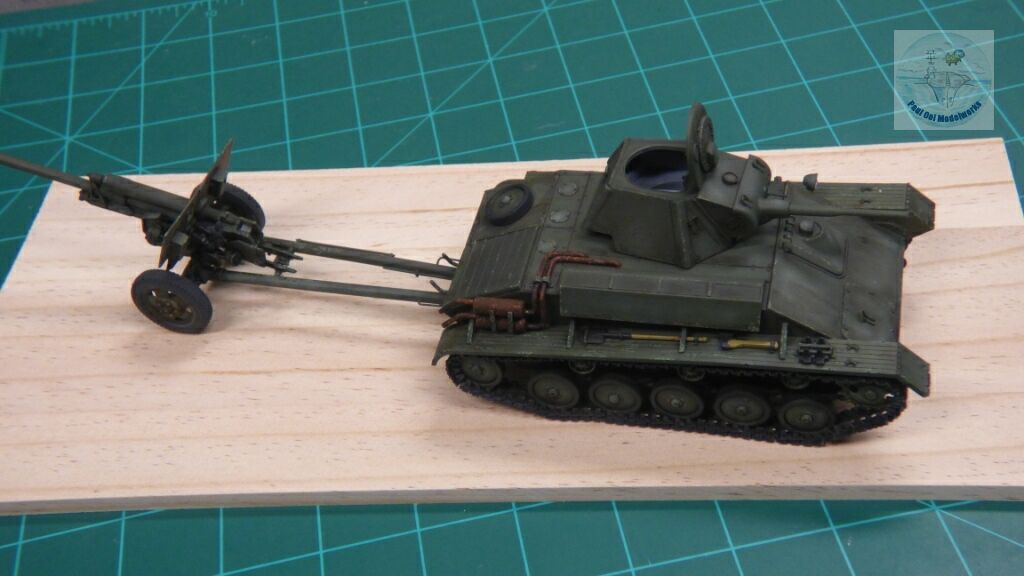
Pre-positioning the tank and field gun to prep for the diorama.
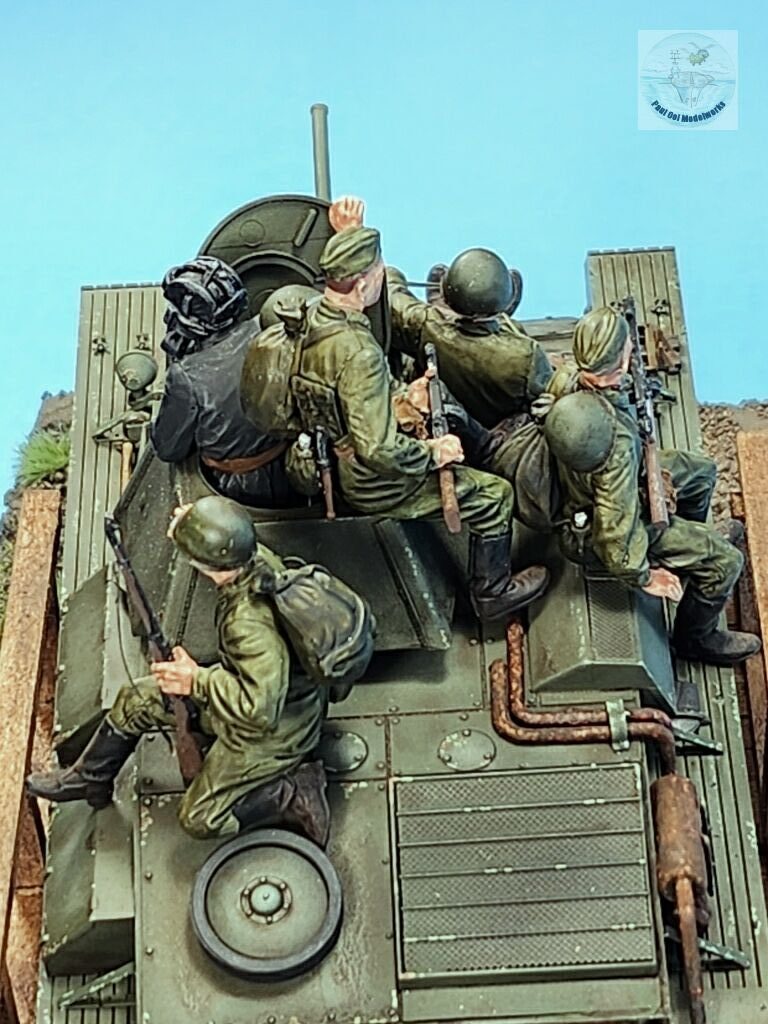
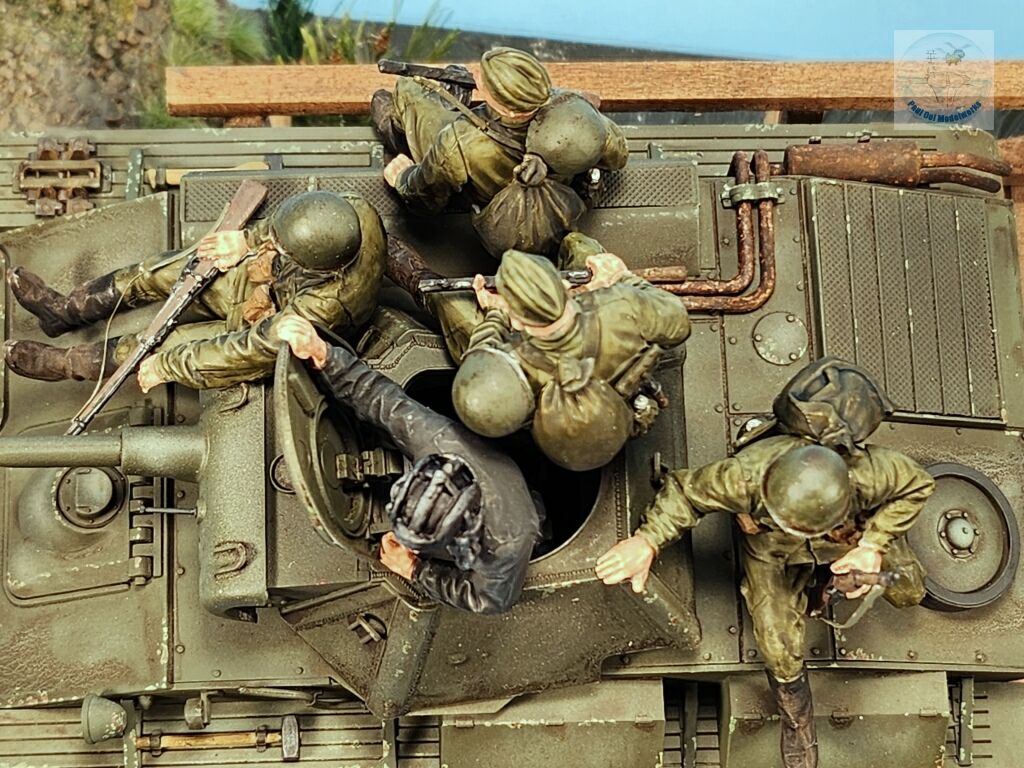
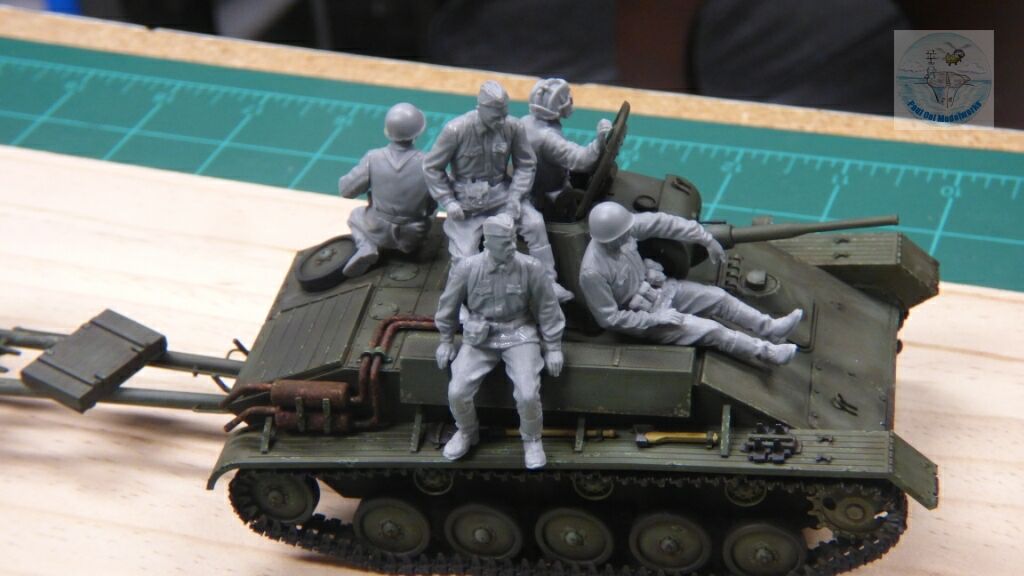
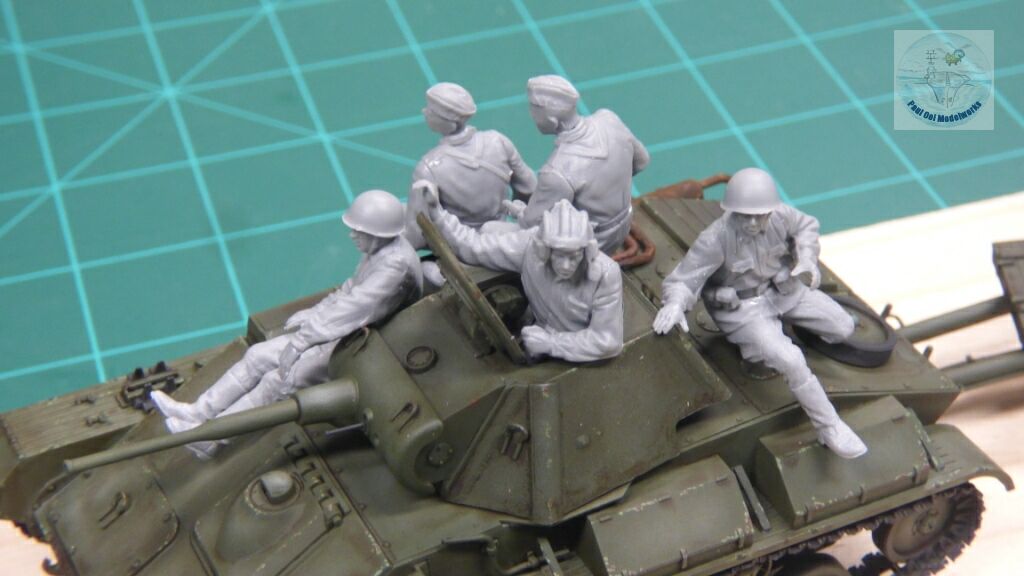
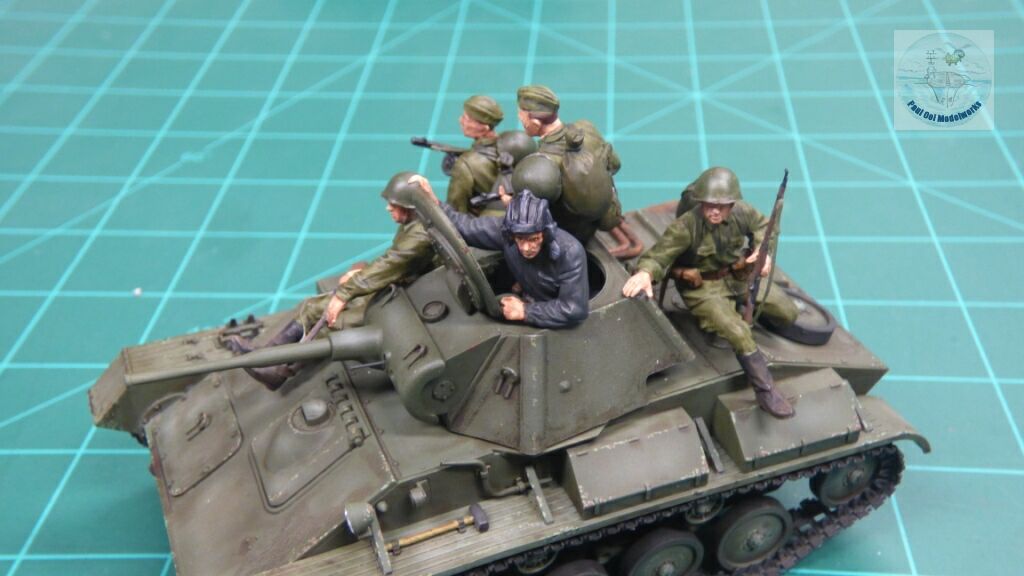
Testing the positions of the tank commander and gun crew prior to figure painting.

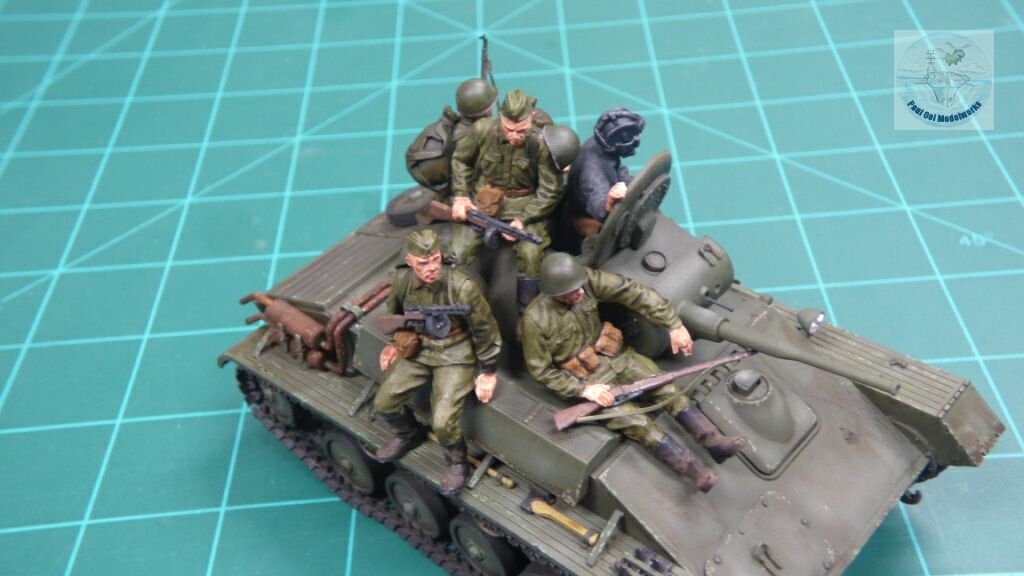
After the figures have been painted using the technique from Tutorial 6.

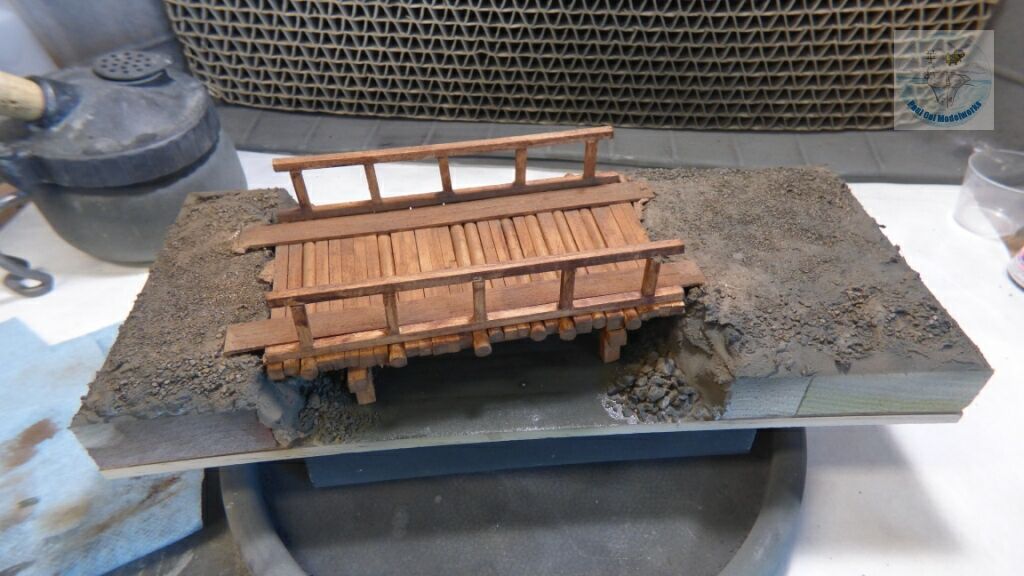
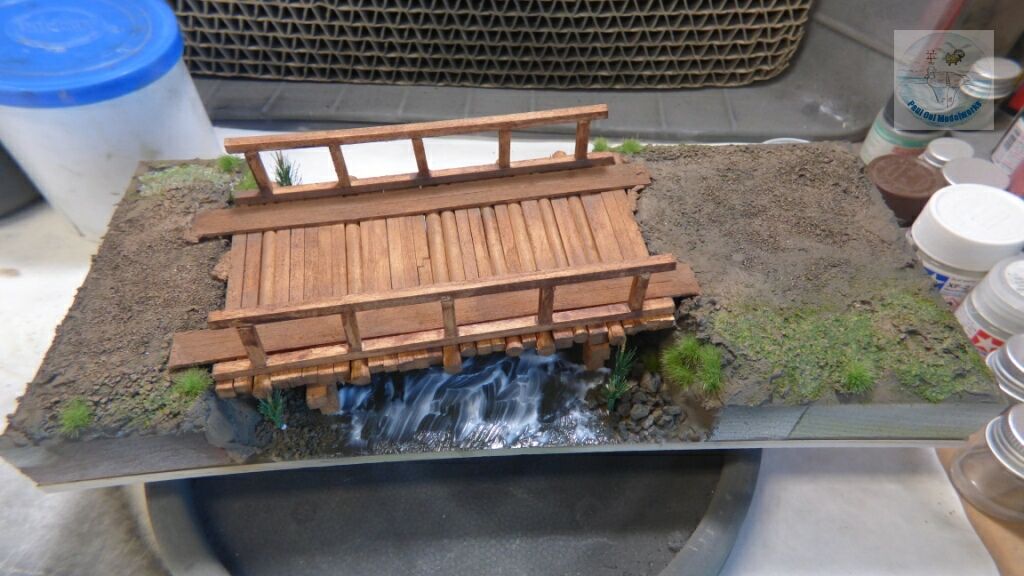
This is the scratch-built bridge for this diorama. The steps are shown in Tutorial 18 Building a Small Bridge.
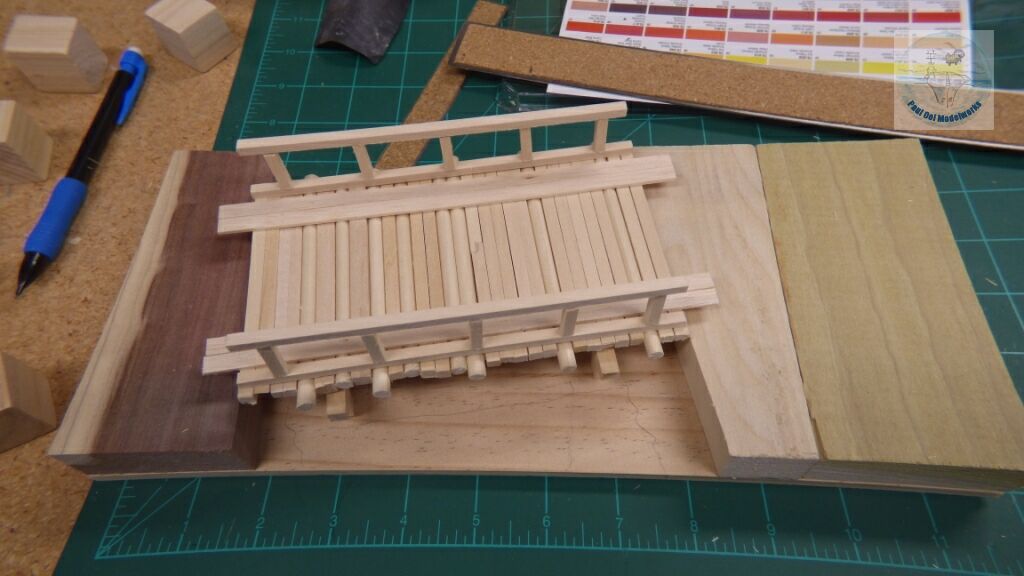
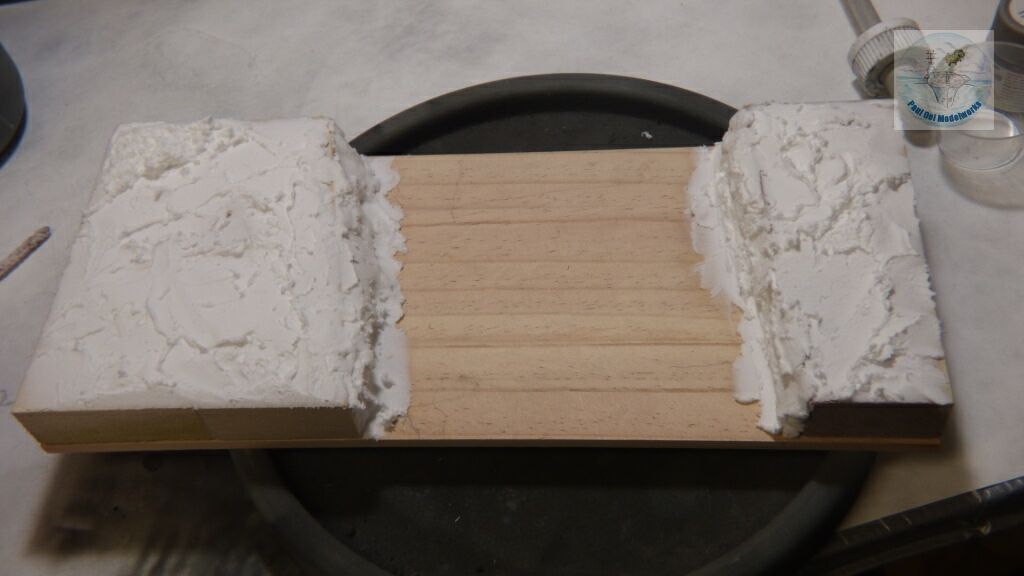
Trial fitting of the bridge and the elevation wood blocks forming the river banks.
The river banks are sculpted with plaster. I do not glue the bridge down until after painting of the landscape.
Trial fitting of the bridge to the painted landscape.
The bridge is now permanently fixed. Note the water effect (still curing, it dries clear) on the river and foliage has been added.

While waiting for the landscape to dry and cure, I painted these two children from the Master Box kit as bystanders to the river-crossing scene.
“Tank-Spotting 1943”

February 22, 2026 · Leave a Comment

Previous Post: « Savoia-Marchetti SM.79 III from Italeri – Anzio Beachhead Attacker
Next Post: FMA IA 58A Pucará of the Malvinas – The Argentine Flying Fortress »

Reader Interactions

Leave a Reply Cancel reply

Your email address will not be published. Required fields are marked *

Primary Sidebar

Hey! It is nice to meet you!

Paul Ooi Modelworks welcomes casual visitors browsing, and enjoying the pictures as well as more serious fellow modelers looking for tips and references on the art of making miniatures and relishing in the challenge. I will be more than happy to answer any questions you may have about the models.

Please feel free to leave a comment or a question.

  • Email
  • Instagram

NEVER MISS A POST

Member of International List of Scale Model Related Web Sites

International List of Scale Model Related Web Sites

Paul Ooi Modelworks

NEVER MISS A POST

Sign up for notification on new posts.

Footer

  • Email
  • Instagram

Categories

  • Privacy Policy
  • Disclaimer
  • Copyright

© 2011–2026 · Paul Ooi Modelworks · All Rights Reserved